Obama And Trump On Immigration

By Ralph Scharnau

The history of immigration to the United States reveals a long and continuing pattern of fractious immigration debate, laced with myths, xenophobia, racism, sexism, and classism.  Over the years, American Indians, women, Catholics, workers, and leftists among others faced prejudice.

During the past decade, the Obama and Trump administrations pursued somewhat different immigration policies.  Obama focused on the people while Trump emphasized the border.

The two term Obama presidency combined massive deportations of the undocumented with efforts to overhaul immigration laws.  Changes in immigration laws and procedures require congressional approval, a long and complicated process.  Republican control doomed any Obama-inspired immigration modifications.

But Obama did lead a successful effort in the summer of 2014 to pass the DREAM Act, a temporary measure opening a path to citizenship for unauthorized immigrants who arrived as minors.  Fearful of hurting Democrats running for reelection in the fall 2014 elections, Obama waited until after the elections to renew his appeal for immigration reform, which Republicans once again blocked.

From the opening days of his presidency, Trump made frenetic moves with immigration quickly emerging as a defining issue.  He tried to curtail undocumented migration by larger border patrols, more effective fences, and wider deportations.  Directing travel bans at Muslims, restricting admissions of refugees, building a U.S.-Mexican border wall, and ending the DREAM program were other administration initiatives.

The Trump administration’s “zero-tolerance” policy criminally prosecuted anyone caught crossing the border “illegally.”   Opposition to the policy came immediately, and it escalated when family separation occurred.  Over 2,500 children were separated from their parents at the border over a period of several months.  Trump insisted the separation was legal and a needed deterrent to illegal entrance.

Protest from the public, Democrats, and even a few Republicans created a firestorm of opposition.  Soon a court order forced Trump to issue an executive order to keep immigrant families together.  While reunification proceeded, many of the detention centers holding families reportedly are overcrowded, unsanitary, and understaffed with the whereabouts of some immigrants still unknown.

The Trump administration’s immigration policies draw opposition across the country and abroad as well.  Critics confront Trump in words and actions.  Examples include opinion pieces and letters to the editor, street demonstrations, lawsuits, rallies, vigils, and other forms of protest.

Convinced of the utter correctness of all his policies, Trump self-righteously dismisses criticism of his immigration policies (and all his other policies for that matter) as coming from unpatriotic congressional Democrats, sore loser Hillary Clinton, and dangerously inept Barack Obama.

Trump opponents charge the administration with fostering hate and fear, betraying the American tradition of welcoming newcomers from all parts of the world.  Led by the ACLU, a number of immigrant rights organizations filed lawsuits against the Trump immigration executive orders aimed at punishing undocumented individuals.

On July 29, Trump tweeted that he would consider shutting down the government if Democrats refuse to vote for his immigration proposals, including a U.S.-Mexican border wall.  The president’s statements on immigration reveal class and racial/ethnic discrimination.  He wants fewer dark skinned folk who are poor or working class immigrants, and more white northern Europeans who are middle class, professional or rich immigrants.

But the very essence of America is our class and ethnic/racial diversity.  Immigrants continue to play a vital role in the economy and culture of our republic.  As workers, taxpayers, consumers, and entrepreneurs, immigrants, including the undocumented, are vital to the nation’s economy.  They deserve decent pay, safe, humane work environments, civil rights, and a path to citizenship.

Posted in Immigration | Tagged , , | 1 Comment

Sunday Funday: Living On McDonald’s Salary Edition

Found this little slice of American life on Twitter this week. You can see for yourself just how simple it is to live on next to nothing. Perhaps congress members and state legislators, governors and presidents should try it.

living on McD's salary

Heating $0? Rent $600? Health Insurance $20? Second income almost equal to the first?

Once again Oy Vey. Let’s have some fun:

  1. What ultra right wing flamethrower was banned from facebook, youtube, iTunes and Spotify this week?
  1. In a Q&A session Wednesday Joni Ernst denied receiving help from what group despite a well documented $3 million expenditures by the group to aid her?
  1. Tune up the twitter machine. Kneeling was seen during the playing of the national anthem where Thursday?
  1. The company that congress member Chris Collins has been accused of insider with failed in tests for a drug to cure what disease?
  1. What suddenly high profile lawyer came to visit Iowa this week in a preliminary step toward a possible presidential run?
  1. The high profile head football coach has been placed on administrative leave in a domestic violence case involving one of his coaches?
  1. What Iowa congress member called for work requirements for welfare in the farm bill last week?
  1. Former football player Randy Moss was inducted into the Football Hall of Fame last Sunday. Why was the tie he wore for the event so notable?
  1. Who was seen boarding Air Force 1 in New Jersey to join Dear Leader on his trip to Ohio a week ago Saturday?
  1. What could possibly be wrong with that?
  1. Mike Pence was out talking up what new branch of the military this week?
  1. What relatives of Dear Leader became US citizens this week?
  1. Commerce Secretary has been accused in lawsuits of embezzling how much from business partners?
  1. What huge bank blamed a “computer glitch” for as many as 625 of their customers losing their home?
  1. With over 8,000 provisional and absentee ballots left to count in the Ohio 12 congressional race, how much of a lead does the Republican have?
  1. In Kansas it is a near dead heat in the republican primary for governor between what two candidates?
  1. On this date in 1908 the first of what car rolled off the assembly line?
  1. Prime Minister Jacinda Ardern says what country will stop providing single use plastic bags over the next year?
  1. After calling for the release of jailed civil rights activists what country had its ambassador expelled from Saudi Arabia?
  1. A memorial sign for what slain civil rights figure was vandalized with bullets after it was up for only a month?

Your weekly John Fugelsang:

“Jesus said help the poor, he forgave criminals, always stood up for the marginalized, chased capitalists from the Temple & was obviously funded by George Soros.”

Answers:

  1. Alex Jones – that must be some kind of trifecta or something
  1. The NRA
  1. At an NFL preseason game. Donny gonna be mad
  1. Multiple Sclerosis
  1. Michael Avenatti
  1. Urban Meyers of Ohio State
  1. Rod Blum – we’d like to see congress do some work also, rod
  1. It had the name of 12 black victims of police brutality written on it.
  1. Hope Hicks
  1. She may be a witness in an future obstruction of justice trial concerning Dear Leader. In short this could be seen as witness tampering.
  1. The Space Force!
  1. Melania’s parents. This must be an example of that chain migration we’ve heard about.
  1. $120 million 
  1. Wells Fargo 
  1. About 1500 votes
  1. Governor Colyer and SOS Kris Kolbach
  1. The Model T
  1. New Zealand
  1. Canada
  1. Emmitt Till

Andy Borowitz:

WASHINGTON (The Borowitz Report)—In a development that could dramatically change the composition of the federal penitentiary system, Republicans are projected to pick up as many as seventy seats in prison, a leading incarceration expert said on Thursday.

Posted in #trumpresistance, Blog for Iowa, Humor | Comments Off on Sunday Funday: Living On McDonald’s Salary Edition

Reynolds Drops Critic From Medicaid Board

video: 3:50 – This seemed like a good place for a good word about Fred Hubbell

Just in case you missed this story, it is definitely worth taking some tome to read through. Looks like Governor Reynolds is so invested in the privatized Medicaid system that critics are not welcome on the Iowa Medical Assistance Advisory Council. If there are only those who approve of what the MCOs (Managed Care Organization) are doing then any board becomes little more than a rubber stamp.

In this case, David Hudson spent two years as the co-chair of the Advisory Council. He believes he was not re-appointed to the Council because he asked too many tough questions:

“I felt that I was asking the questions the governor should have been asking,” he said in an interview at his Windsor Heights home. “… I guess I pushed back too hard or something.”

Hudson, 61, served as a lobbyist for then-Gov. Terry Branstad in the 1990s. He said Branstad, a fellow Republican, appointed him as co-chairman of the Medicaid council two years ago because of his experience caring for his profoundly disabled son, Matthew. Matthew, 30, is covered by Medicaid, the joint state and federal health-care program.

Hudson said he initially supported Branstad’s 2015 decision to hire private companies to manage care for the 600,000 Iowans on Medicaid. But he said he felt a duty to speak up when he saw those companies cut crucial services to his son and other Iowans with disabilities.

Hudson believes his detailed inquiries led Branstad’s successor, Reynolds, to deny his request for reappointment when his council term expired June 30.

Reynolds and other supporters of private Medicaid management say it is leading to more efficient, effective care. Critics say privatization has led to drastic cuts in services for disabled people and piles of unpaid bills to the agencies that provide their care.”

Be sure to read the whole story to see where it is at right now.

While the Medicaid Privatization in Iowa has been, simply stated, a disaster, it only serves to illustrate a much larger problem that Republicans have in Iowa. They only govern for a small segment of the population. That segment does not include the poor, the middle class, seniors, women, children or just about any group you can name that is not rich.

Branstad was a bit better about hiding the favoring of the rich. Reynolds is much less schooled at doing so and seems to not really care. She is worried about being re-elected and cares little about actually governing. She knows that campaigns run on dollars and she knows who has the dollars.

In contrast to the governor, Fred Hubble came out early and strong on returning the management of the Medicaid program to the state. This is for the benefit of the customers of the program – the patients who must rely on the services provided by Medicaid:  

“Governor Reynolds’ Medicaid privatization crisis deepened in the last few weeks as more revelations emerged of her failed for-profit healthcare program. A July 6th article in the Des Moines Register exposed Medicaid private managers’ repeated attempts to deny care to Jamie Campbell, a paralyzed Iowan from Fontanelle. Gubernatorial candidate Fred Hubbell reacted immediately to this Iowan’s continued suffering while Reynolds stubbornly refuses to accept responsibility.

“We cannot stand for this. On Day One as governor, I will work to bring Medicaid back under state control, for Mr. Campbell and the thousands of Iowans like him that are trapped in an endless cycle of appeals for care they desperately need,” said Hubbell.

Meanwhile, Reynolds still claims her for-profit Medicaid program is working. In an interview last month on Iowa Public Radio, she cavalierly dismissed the numerous reports of patients losing care.

“I can say to them this is patient-focused, proactive. We want to make sure that we’re getting the outcomes that we, that they deserve and that we have a system that’s sustainable,” said Reynolds.”

While Republicans have denied it from day one of Branstad’s unilateral decision to privatize Medicaid in Iowa, the emphasis has been on profits for the management companies and not patient care.

And who knows, maybe with Fred Hubbell as governor, maybe we could get some honest answers about how much this privatization has really cost Iowans. We can’t get them now.

Posted in Blog for Iowa, Kim Reynolds | Tagged , , , | Comments Off on Reynolds Drops Critic From Medicaid Board

David Cay Johnston: How Soybeans Explain What’s Really Going On In Trump’s Trade War

The Truth Behind His Economic Lies

video 2 minutes

If David Cay Johnston’s dcreport.org is not on you reading list it surely should be. David Cay Johnston has been one of the fiercest critics of the the trickle down economy. At the same time he has for some 30 years been a fierce critic of Donald Trump.

Johnston’s most recent book concerning Trump is the best seller “It’s Even Worse Than You Think.” This book has been out for about 7 months. In that short space of time much has already changed in America and in Trump’s world. Johnston is able to keep the public up to date on events that are going on behind the scene as we and much of the media is distracted by Trump’s tweets, various ongoing investigations and the general chaos of the Trump administration.

Among the chaos of the administration has been the rise of tariff laws and the out of the blue consequences that selected groups of Americans will have to endure. These Americans became the victims of the tariff wars started by Trump  because they were viewed as groups that were loyal to Trump. One of those groups is soybean farmers.

On Wednesday, Johnston explains that what appeared to be good news on the economy today may only be good news on the surface:

There’s good economic news, Donald Trump declared July 27, with the economy growing 4.1% in the second quarter of 2018. That number is accurate, for the moment, provided you don’t look beneath the surface or back at past economic performance or to a horizon about 60 days out.

Johnston notes that what Trump declares to be a “historic” turnaround is in reality not too great:

Obama did better in four of the 32 quarters he was in office. So did every other president back to Harry S Truman.

So where do the soybeans fit into this little web of – uh – pumping up the story by the Trump Administration? Johnston lays it out here:

Trump’s best turns out, in good part, to be an artifact of his trade war with China. In the second quarter, America experienced a massive spike in sales of soybeans. Sales and purchases of other products also soared as “business stockpiled inventory ahead of the impending import duties,” according to a Reuters survey of economists.

Soybean prices in late July stood at $8.72 a bushel, half their June 2012 peak of $17.375. That’s before adjusting for inflation, which would make the 2012 price more than $19 per bushel.

No wonder Trump wants $12 billion of welfare for soybean farmers in areas that favored him in the 2016 election because he promised to put their interests first. If he doesn’t reach into your pocket to give money to those farmers they may be out with pitchforks and many of them certainly will not reward him again at the ballot box.

So there you are – economic numbers puffed up apparently by a one-time buying spree by foreign counties stocking up before Tariffs go into effect.

No one is sure which way the Trump administration may turn next. One thing seems to be sure, though. It is doubtful that what ever direction they choose will most likely not be a carefully considered position nor will there be any thought given to who or what may be affected. As with most decisions we have seen from this administration, most likely any decision will be spur of the moment with only some vague ideological concept in mind – or possibly the approval of a certain Russian dictator.

It is one hell of a way to run a country.

video discussing “It’s Even Worse Than You Think” – 1 hour

Posted in #trumpresistance, Blog for Iowa, Economy | Tagged , | 1 Comment

Public Health Approach To Gun Violence

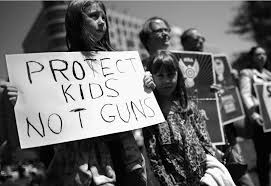
Protect Kids Not Guns

On page A5 of Tuesday’s Cedar Rapids Gazette was the headline “75 shot in Chicago last weekend.”

From 3 p.m. Friday until 6 a.m. Monday 12 people were killed and 63 wounded, mostly on the south and west sides of the city.

It seems like a lot, even for a large city. Shootings in Cedar Rapids are frequent, but not like this. Is the headline a call to do something about gun violence?

Chicago law enforcement attributed the shootings to gangs who shoot into summer crowds at night, according to the news story. The shootings appear to be random, and ongoing. At least 1,700 people have been shot in Chicago this year. It is one tough city.

In the early 1990s I attended a session of arraignment court near the Washington Park neighborhood on the south side. It was an eye opener. Case after case came before the judge: shootings, domestic violence, assault, petty theft, sexual assault — plaintiffs were bandaged and bruised by incidents that provoked the court appearance. The public defender would lose track of his clients and which case was being heard. It was a chaotic meat grinder.

Experiences like these lead me somewhere besides lack of gun control as the core problem regarding social violence. The lightning rod has been the National Rifle Association.

Progressives found a certain amount of glee in the recent story in Rolling Stone titled “The NRA Says It’s in Deep Financial Trouble, May Be ‘Unable to Exist.’” The NRA is the poster child for what’s wrong about gun culture in the United States.

“The National Rifle Association uses its enormous lobbying power to stymie legislative debate and block most constructive gun legislation,” Ralph Scharnau recently wrote. “Thus even very moderate provisions fail to pass or even get out of committee.”

As a society Americans are not good at controlling violence. That includes our elected officials.

Chicago stands as an example the solution to gun violence is not only gun control. I’m not alone in believing that. The World Health Organization proposes violence be treated as a public health problem, outlining four basic approaches:

  1. Uncovering as much basic knowledge as possible about all the aspects of violence through systematically collecting data on the magnitude, scope, characteristics and consequences of violence at local, national and international levels.
  2. Investigating why violence occurs – that is, conducting research to determine the causes and correlates of violence; the factors that increase or decrease the risk for violence; and the factors that might be modifiable through interventions.
  3. Exploring ways to prevent violence, using the information from the above, by designing, implementing, monitoring and evaluating interventions.
  4. Implementing interventions that appear promising, widely disseminating information and determining the cost-effectiveness of programs.

Hasn’t this work been done? Yes it has. WHO produced a list of ten evidence-based strategies for preventing violence.

  1. Increase safe, stable, and nurturing relationships between children and their parents and caretakers;
  2. Reduce availability and misuse of alcohol;
  3. Reduce access to lethal means, such as guns, knives,and pesticides (often used to commit suicide, especially in low-and middle-income countries);
  4. Improve life skills and enhance opportunities for children and youth;
  5. Promote gender equality and empower women;
  6. Change cultural norms that support violence;
  7. Improve criminal justice systems;
  8. Improve social welfare systems;
  9. Reduce social distance between conflicting groups;
  10. Reduce economic inequality and concentrated poverty.

Will a public health approach to preventing gun violence work? I don’t know, but what we are doing now — hammering the NRA and elected officials — isn’t. It’s time to try something else.

Posted in gun control, Public Health | Tagged , , , | Comments Off on Public Health Approach To Gun Violence

After Dave Loebsack

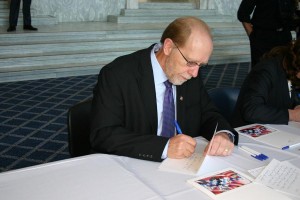
Dave Loebsack Signing Holiday Cards for Members of the Armed Forces

You don’t need to be a political insider to understand Dave Loebsack’s days in the U.S. House of Representatives are getting numbered.

Loebsack seems likely to dispatch with power his second time opponent, Chris Peters from Coralville, this year. He could continue to run for Congress for several more terms. I think he should continue to run and would be willing to chip in to buy a wheelchair to get him to the floor to vote should he become infirm as he ages. It’s not about me.

What about when Dave decides to put away his running shoes? He reaches the Social Security Administration’s “full retirement age” later this year.

Will he start a third career? Will he run for the U.S. Senate? Will he continue to serve in the U.S. House? Will he kick back with his retirement packages from Cornell College and the House and take it easy? Any of those is possible and only Dave knows. I don’t care to speculate about his plans.

The risk Second District voters face when Dave moves on is an open seat becomes more vulnerable to a Republican takeover. Dave created a trove of institutional political knowledge about the district since first being elected in 2006. Presumably he will be willing and able to help a potential successor learn what he’s learned. As we saw in 2014, Tom Harkin’s departure from the U.S. Senate did not go well for Democrats. Harkin knew the political landscape of the state as well as anyone and that didn’t help Democrats win his seat.

Loebsack’s first election to the House was a reaction to the incumbency of Jim Leach, and a repudiation of President George W. Bush. When Bush was reelected in 2004, Democratic voters were activated for change. Leach, partly through his participation as House Banking Committee chair during the Whitewater investigation of the Clintons, caught shrapnel from the wave election that was 2006. Those of us making political telephone calls at the time heard voters ready for a change. There were enough of them to tip the scales to a Loebsack win. Those dynamics don’t exist today.

Loebsack has been able to survive the Republican resurgence during the last four cycles. That doesn’t mean a potential successor will get elected. Voters don’t change that much but political dynamics get reset in an open race. I expect the first election once Dave announces retirement will be a barn burner.

Who could replace Dave Loebsack? A few names have been suggested, but it’s been scuttlebutt, gossip and wishful thinking thus far. It makes sense for a potential candidate to have deep grassroots political experience as Loebsack did, or significant service in the Iowa legislature. However, the electorate seems to be moving out of the age of reason into darker territory. Presently, that’s not a question on the minds of many Democrats I know. We just feel Dave will always be available, regardless of reality, reason and logic.

Loebsack reaches full retirement age on Dec. 23. He may not be ready to retire from the House, and many Democrats, including the author, would like to see him seek another term in 2020. However, the day is coming and preparation to find a successor should begin if it hasn’t already. What is that process? I don’t know. If it’s an open race, anyone could run, and several probably will.

For now, the work is to reelect Dave Loebsack in 2018 and give him some help in the other Iowa Congressional Districts. That’s what many of us will be doing over the next three months with an eye toward the future.

Posted in 2018 Election Campaign, politics | Tagged , , , , , | Comments Off on After Dave Loebsack

Tim Gannon For Agriculture – An Easy Decision

Supporting Tim Gannon for Iowa Secretary of Agriculture is an easy decision.

Iowa Democrats want and need a secretary of agriculture that understands the current farm economy and is willing and capable of moving the state toward sustainability in agriculture.

Tim Gannon is that person.

Sustainability is not an abstraction dreamed up by a bunch of 1960s era tree huggers. If climate change continues to supercharge our weather we will see longer droughts, increased numbers of tornadoes and more frequent extreme weather events. Already we are seeing hotter ambient temperatures and increased carbon dioxide in the atmosphere reducing the nutritional content of Iowa crops.

Year after year topsoil is washed away. There is a limit to how much we can lose and continue to grow crops in soil. With the soil go excess loads of nitrogen and phosphorus which find their way into the Mississippi River basin and aggregate in the Gulf of Mexico.

For progressives to address these big picture items we need a secretary of agriculture who possesses credibility in agriculture, who can relate to current farmers, and stabilize turbulence in the marketplace so needed changes can be made.

Learn more about Tim Gannon on his website here. Following is the “Meet Tim” section verbatim.

Tim Gannon farms with his dad and cousin on the family’s Century Farm in Jasper County. Growing up in Mingo, Tim learned early on that Iowa farmers held the dual roles of feeding the nation and world, while serving as the backbone of the rural economy.

Living through the Farm Crisis, Tim saw first hand that a tough time on the farm meant a tough time in town. Tim’s Dad Bill Gannon, owned the local John Deere store and as farmers were forced out of business during the Farm Crisis, Main Street businesses took a hit, too. As families were forced off farms, businesses closed up, and layoffs hit, meaning many young Iowa families were forced to move, oftentimes out of state.

That experience drives Tim everyday to improve our rural economy, and increase opportunities for Iowans across the state. As Secretary of Agriculture Tim will work to find new uses for the corn and beans we grow and keeping foreign markets open for our products; improve soil health so that our farmers remain the most productive in the world; and protect our water resources so that everyone in Iowa has clean, safe, affordable drinking water.

From 2009 to 2017, Tim worked for former Iowa governor and U.S. Secretary of Agriculture Tom Vilsack in various positions focused on improving risk management options for farmers and ranchers, creating jobs in rural communities, and improving the delivery of USDA services and programs to all Americans. When credit was especially tight for rural businesses in 2009, Tim helped USDA Rural Development implement an expanded business loan program improving its delivery in all 50 states.

As Associate Administrator of the Risk Management Agency he helped oversee implementation of the 2014 Farm Bill expanding insurance options for new and beginning farmers, producers of various sizes and production methods, and insurance products for new crops. Tim worked to address difficult issues to ensure RMA worked more efficiently and respond to farmers use of new technology. Before he left USDA, RMA scored the highest of any USDA office or agency on the Federal government’s Best Places to Work survey.

In addition to farming, Tim works with a new business where he and his partners sell crop insurance to farmers and ranchers, helping them manage the risk inherent in agriculture.

Tim and his wife, Liz, welcomed a daughter, Lucy, in December 2017. They live in Des Moines with their big black dog Bert. Tim enjoys Hawkeye sports, running with Bert, BLTs with homegrown tomatoes, and searching for the best pork tenderloin in Iowa.

Follow Tim Gannon on social media:

Facebook
Twitter
Instagram

Posted in 2018 Election Campaign, Farming, Food Insecurity, politics | Tagged , , , | 1 Comment

Scourging Yemen

Kathy Kelly

Scourging Yemen
by Kathy Kelly

On May 10, the Kingdom of Saudi Arabia informed the UN Security Council and UN Secretary General Antonio Guterres that Saudi Air Defenses had intercepted two Houthi ballistic missiles launched from inside Yemeni territory targeting densely populated civilian areas in Riyadh, the Saudi capital. No one was killed, but an earlier attack, on March 26, had killed one Egyptian worker in Riyadh and an April 28 attack had killed a Saudi man.

Unlike the unnumbered victims of the Saudis’ own ongoing bombardment of Yemen, this total of two precious, irreplaceable lives is easy to document and count. Death tolls have become notoriously difficult to count accurately in Yemen. Three years of U.S.-supported blockade and bombardment have plunged the country into immiseration and chaos.

In their May 10th request, the Saudis asked the UN to implement “all relevant Security Council resolutions in order to prevent the smuggling of additional weapons to the Houthis, and to hold violators of the arms embargo accountable.” The letter accuses Iran of furnishing the Houthi militias with stockpiles of ballistic missiles, UAVs and sea mines. The Saudis’ letter omits mention of massive U.S. weapons exports to Saudi Arabia and the United Arab Emirates (UAE).

The Security Council resolutions invoked by the Saudis name the Houthis as a warring party in Yemen and call for an embargo so that the Houthis won’t acquire more weapons. But these Resolutions don’t name the Saudis as a warring party in Yemen, even though Crown Prince Mohammed bin Salman has, since March 2015, orchestrated Saudi involvement in the war, using billions of dollars of weapons sold to the Saudis and the UAE by the U.S. and the UK.

The Saudis have an undeniable right to call on the UN to work toward preventing the Houthis from acquiring ballistic weapons that could be fired into Saudi Arabia, but the air, sea and water blockade now imposed on Yemen brutally and lethally punishes children who have no capacity whatsoever to affect Houthi policies. What’s more, the U.S. military, through midair refueling of Saudi and Emirati warplanes, is directly involved in devastating barrages of airstrikes while the UN Security Council essentially pays no heed.

As Yemeni civilians’ lives become increasingly desperate, they become increasingly isolated, their suffering made invisible by a near-total lack of Western media interest or attention. No commercial flights are allowed into the Sana’a airport, so media teams and human rights documentarians can’t enter the areas of Yemen most afflicted by airstrikes. The World Food Program (WFP) organizes a weekly flight into Sana’a, but the WFP must vet passengers with the Saudi government. Nevertheless, groups working in Yemen, including Amnesty International, Médecins Sans Frontières (MSF), Save the Children, Oxfam, and various UN agencies do their best to report about consequences of the Saudi-Emirati led coalition’s blockade and airstrikes.

On May 18th, Médecins Sans Frontières (MSF) issued a report about airstrikes against the Saada governorate which notes that “in the past three years, the coalition has carried out 16,749 air raids in Yemen, i.e. an average of 15 a day. Almost a third of the raids have hit non-military sites.”

Earlier in May, MSF responded to a series of Saudi-Emirati coalition led airstrikes on May 7th which struck a busy street in the heart of Sana’a, Yemen, killing six people and injuring at least 72.

“Civilians, including children, were killed and maimed because they were in the wrong place at the wrong time,” said João Martins, MSF head of mission in Yemen. “No-one should live in fear of being bombed while going about their daily life; yet again we are seeing civilian victims of airstrikes fighting for their lives in hospitals.”

Lacking access to food, clean water, medicine and fuel, over 400,000 Yemeni children are, according to Save the Children, at imminent risk of starvation. “Most of them will never see a health clinic or receive treatment,” says Kevin Watkins, the organization’s UK Director. “Many of those who survive will be affected by stunting and poor health for the rest of their lives.” Watkins says the Saudi-UAE led coalition is using economic strangulation as a weapon of war, “targeting jobs, infrastructure, food markets and the provision of basic services.”

On March 22, Amnesty International called for an end to the flow of arms to the Saudi-led coalition attacking Yemen. “There is extensive evidence that irresponsible arms flows to the Saudi Arabia-led coalition have resulted in enormous harm to Yemeni civilians,” their statement says. “But this has not deterred the USA, the UK and other states, including France, Spain and Italy, from continuing transfers of billions of dollars’ worth of such arms.”

The UN Charter begins with a commitment to save succeeding generations from the scourge of war. The UN Security Council has miserably failed Yemeni people by allowing the scourge of war to worsen, year by year. By approving biased resolutions that neglect to even name the most well-funded and sophisticated warring parties in Yemen — Saudi Arabia; the United Arab Emirates; the United States — the Security Council promotes the intensification of brutal, apocalyptic war and enables western war profiteers to benefit from billions of dollars in weapon sales. Weapon manufacturers such as Raytheon, Lockheed Martin and Boeing then pressure governments to continue selling weapons to two of their top customers, Saudi Arabia and the UAE.

Earnest, honest and practical steps to stop the war are urgently needed. The U.N. must abandon its biased role in the Yemen conflict so that it can broker a peace in which the Houthi minority can retain some dignity and representation in majority-Sunni Yemen, which even before the Houthi uprising lacked any legitimately elected leader. They must be given an option to lay down arms without ending up in any of the clandestine prisons operated by the UAE in Yemen, reported to be little more than torture camps. Even more urgently, the violence and economic strangulation by foreign invaders must cease.

At the very least, citizens in countries supplying weapons to the Saudi-Emirati coalition must demand that their legislators forbid all future sales. The time for determined action is running out in the U.S. as the State Department is already taking preliminary steps toward a massive, multibillion-dollar sale of weapons to Saudi Arabia and the UAE. The package is said to include tens of thousands of precision-guided munitions from Raytheon.

Yemeni civilians, especially children, pose no threat whatsoever to U.S. people. Yet U.S. support for airstrikes, blockades and the chaos inevitably caused by prolonged war threatens Yemeni civilians, including vulnerable children, punishing them to death for committing no crime.

Kathy Kelly co-coordinates Voices for Creative Nonviolence (www.vcnv.org). This article was reprinted with permission of the author.

Posted in Children, Foreign Affairs, Guest Posts | Tagged , , , , | Comments Off on Scourging Yemen

On The Comeback Trail – Asbestos

Earthrise by Bill Anders, Dec. 24, 1968

The Environmental Protection Agency is not what it once was as the Trump administration finishes year two.

In addition to public renunciation of the words “climate change,” combined with promotion of fossil fuels which contribute to global warming, Trump’s minions are eating away at the foundation of protections the agency created since President Nixon formed it on Dec. 2, 1970. Like a swarm of termites, they follow an agenda crafted by conservative think tanks to deregulate what is perceived as infringement on the liberties of corporations to practice unfettered capitalism.

A national environmental movement influenced Nixon’s decision to create the EPA, and only a similar movement will stop the current administration from dismantling it. Thus far, nothing has proved egregious enough to precipitate a movement like the one that rose in the 1960s. Will the last straw be reintroducing asbestos into our consumer society?

You’ve got to be kidding me. Asbestos?

Asbestos may be coming back to your neighborhood, according to Aileen Kwun who posted an article about it on Fast Company July 31.

“Asbestos, a dangerous carcinogen outlawed in more than 55 countries, could make a comeback in the United States, under Trump’s Environmental Protection Agency,” Kwun wrote. “The EPA has even made it easier for companies to introduce new uses of asbestos-containing products in America — many of which could end up in common products in your home, as well as the materials used to build it.”

“Trump has been outward in his views on the asbestos industry,” she said. “His 1997 book Art of the Comeback explicitly stated that asbestos bans are a conspiracy ‘led by the mob, because it was often mob-related companies that would do the asbestos removal.’”

On June 1, the EPA enacted a Significant New Use Rule (SNUR) allowing the manufacture of new asbestos-containing products to be petitioned and approved by the federal government on a case-by-case basis, according to Kwun.

Ask a public health official and they will say EPA should continue to regulate asbestos as they have.

Asbestos? Making a comeback? Good grief! Read Kwun’s entire article here.

George Carlin famously said, “Environmentalists don’t give a shit about the planet, they don’t care about the planet… You know what they’re interested in? A clean place to live. Their own habitat. They’re worried that some day in the future they might be personally inconvenienced.”

There is little about the modern environmental movement and its reaction to changes at the EPA to prove Carlin wrong. In the meanwhile, termites continue to consume the regulatory foundation for a safe environment built up over decades.

Posted in Environment | Tagged , , , | 5 Comments

Candidate Responds To Obama’s Endorsement

5a5e443c1ffe2.image

From house district 91 candidate Laura Liegois

Thanks, Obama!

No, but really. THANKS, OBAMA!

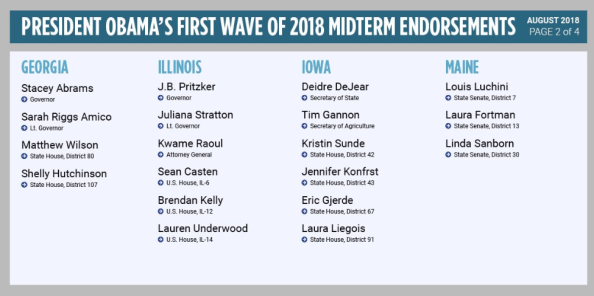
I just got off the phone with my team and they told me the exciting news: President Barack Obama endorsed our campaign for Iowa House!

It’s not too often that former presidents get involved with state legislative races — so this is a monumental moment for us. To celebrate this incredible day, we’re setting a goal of getting 44 contributions from supporters like you (in honor of our 44th president!) before midnight. Can you make a donation right away?

We all feel a special connection to President Obama, especially here in Iowa. But I admire him for his outstanding work he did before we was ever elected to any political office. Barack Obama was a community organizer — putting in long, tough hours to make change in his backyard. I carry that same spirit with me in the volunteer work I do. And it’s why I have dedicated every moment of free time I have to volunteering in my community.

President Obama’s endorsement today means so much to me. But the icing on the cake would be meeting our goal of 44 grassroots contributions to help celebrate the endorsement from our 44th president.

I’m counting on your support to help us reach this goal — click here to make a contribution before midnight!

Thanks for everything,

Laura

The other Iowa endorsees and their contribution pages:

obama endorsements

Deidre DeJear, Secretary of State:   https://secure.actblue.com/donate/dejear

Tim Gannon, Secretary of Agriculture: https://secure.actblue.com/donate/gannon-for-iowa?refcode=website

Kristin Sunde, State House district 42:    https://secure.actblue.com/donate/kristin-sunde-for-iowa-house-1#

Jennifer Konfrst, State House district 43:    https://secure.actblue.com/contribute/page/18launch

Eric Gierde, State House district 67:     https://secure.actblue.com/contribute/page/efi


Image (2) president-obama-150x150.jpg for post 32529

Posted in 2018 Election Campaign, Blog for Iowa | Tagged , , | Comments Off on Candidate Responds To Obama’s Endorsement