Almost There – Making Sure Net Neutrality Happens

al franken on net neutralityHere is an action alert from Freepress reminding us that we must not drop the ball before it’s over the goal line.

Freepress.net

It’s Here: FCC’s Net Neutrality Plan

It’s official: This morning FCC Chairman Tom Wheeler laid out his plan1 to reclassify broadband access under Title II of the Communications Act.

You did this. You. If everything keeps moving in this direction, we’ll be celebrating a huge victory for Net Neutrality on Feb. 26, when the FCC votes on the rules.

There’s a ton to celebrate here. But a whole lot could go wrong between now and then. Over the next three weeks, we have to be more vigilant than ever and make sure that the phone and cable companies don’t crush us.

We’ll be in touch as things develop. Oh, and if you have any friends who haven’t joined the fight yet, send them this link so they can sign up.

Thanks so much for everything you’ve done over the past year—

Candace, Craig, Misty and the rest of the Free Press team
freepress.net

P.S. Winning public interest victories takes dollars. Donate $10 to help us bring this over the finish line.

1. “FCC Chairman Tom Wheeler: This Is How We Will Ensure Net Neutrality,” Wired, Feb. 4, 2015

Free Press and the Free Press Action Fund are nonpartisan organizations fighting for your rights to connect and communicate. Learn more at www.freepress.net.

Join us on Facebook and follow us on Twitter.

Posted in Internet Issues | Tagged , | Comments Off on Almost There – Making Sure Net Neutrality Happens

Democratic Lawmakers Are Fighting For Iowa Schools

Iowa State Capitol

Iowa State Capitol

There is a fight heating up in the Iowa legislature over funding for education.  Listening to ALEC, the Republicans are suggesting a paltry 1.25% increase in funding for k-12.  Democrats are listening to teachers and educators, and they understand that 1.25% is no increase at all, and it would do nothing but continue the devastating course laid out for public education by the Branstad administration via ALEC.   [See Starving Public Schools and Exposing ALEC’s Agenda to Defund and Dismantle Public Education.]

I listened to some of the public testimony and it was heartbreaking to hear principals, superintendents, and other educators talk about the gross hardships to kids and teachers due to underfunding of Iowa’s schools.

The Senate Dems have released transcripts of compelling and powerful testimony from teachers and educators around Iowa.  Please read their stories then contact your state senator and representative.

http://www.senate.iowa.gov/democrats/a-serious-meaningful-step-forward-for-iowas-local-schools/

A sampling from school visits, phone calls, emails and other reports received by Iowa Senate Democrats in the past few weeks:

From a high school science teacher in eastern Iowa:

I hold cupboard doors closed with rulers because they won’t stay closed any more. We have had the gas turned off in my +45 year old lab because of leak concerns, and they threaten to turn off my water in my lab because of leaks into the downstairs lab. My books for biology were copyrighted in 2000 and our classroom computers are going on 4 years old. My class sizes of 25 or more are not conducive to inquiry.

From teachers and administrators in Newton

The Middle School no longer has Industrial Arts: no student is taught metals, woods or plastics unless they meet the criteria to go to the Career Academy at DMACC. A 1.25% increase = $191,000 in “new money.” That leaves a shortfall of $382,000. This shortfall is proposed to be covered by a $0.375 increase in school property tax levy through the budget guarantee.

From an elementary school teacher in Waukee

The teacher-pupil ratio in my building’s kindergarten classes is 26 to 1 because we can’t afford to hire additional teachers. I know many of you in this room believe the teacher-pupil ratio is much less, but it is not. Our teacher pupil ratio is not ideal.

Twenty different languages are spoken in our building. Several students who attend our school are refugees. They are new comers who know little to no English. Teachers overcome these hurdles in addition to teaching their curriculum and make sure all their students receive the love, attention, and differentiated instruction they deserve. Quite simply, we need more teachers, but there is no money to hire additional staff.

From an elementary teacher in Cedar Rapids

I have been in the classroom for more than 14 years and due to budget cuts over the last few years, my class sizes have been between 25 to 28 students. During the 2011-12 school year, I had 35 fourth graders in my classroom. I’d like you all to imagine 35 fourth graders in a classroom. We are all packed like sardines in this hearing room tonight. Imagine that this is what it feels like in a classroom with 35 students only we are together, every single day, trying to learn

From a Northwest Iowa Superintendent

We need 6% for no cuts, 4% minimum…If the current House’s proposal passes we will be looking to cut an amount equal to 4.7 teachers in FY 17. This is not acceptable.

From Superintendent Mary Jo Hainstock, Vinton-Shellsburg

Our students deserve better and more than Governor Branstad has recommended. The spending per student is well below the national average and, if the recommendation is followed, we would be on a trajectory to be part of the lowest 20% in the nation. If we want our state to remain economically viable, we need to prepare our students for their futures. We need adequate resources to do this.

From Superintendent Dan Maeder, Davis County Community School District

Fund education like you want Iowa to lead the nation once again.

From a Central Iowa School Board member

As a school that is just getting our financial feet under us cash-wise, a 1.25% SSA increase would deal a hefty blow as it does not give us the spending authority we need to run our school. Without it, we are looking at possible staff reductions, maybe even program reductions, when we thought we cut as far as we could a couple of years ago. Our students deserve better.

One of Governor Branstad’s main goals (as listed on his website) is having the best schools in the nation. The duties and expectations put upon our staff continue to increase every year to reach this goal, however, Iowa continues to fall in educational funding per student (currently 35th)! I realize that just throwing money into something won’t make it better, but actions speak louder than words. If the state is not willing to invest in our schools (and continue to invest less than most other states), they will never end up anywhere near the top of the list.

From a North Iowa School Board member

The amount of SSA that is suggested in these initial proposals (from the House and Governor) will not cover the increased costs of doing business, and will most likely lead to teaching positions being reduced, and programs for our students being reduced, as well as a possible increase in property taxes.

The governor and the legislature have been preaching “World Class Schools” for the last several years. How are we to develop “World Class Schools” in Iowa when we continue to underfund K-12 education. The state is asking us to provide “Cadillac” education while funding us at “Yugo” prices.

From a Central Iowa School Superintendent

The State of Iowa must end the current trend of underfunding our schools. Over the last 14 years school funding has been reduced by 17% due to across the board cuts, eliminated funding for technology, and reduced dropout prevention funds. Currently the State of Iowa’s per pupil spending ranks 35th in the nation spending $1612 less per pupil than the rest of the nation. This is not acceptable, how will Iowa’s Schools be able to provide a world class education with third world funding?

From an Eastern Iowa teacher

Right now I am asking you to help with an urgent matter that impacts us all: funding for public education. House File 80 sets Supplemental School Aid at 1.25%. That is an inadequate amount and would result in overcrowded classrooms, outdated textbooks, fired teachers, etc. Most school districts need at least 4% to avoid budget reductions, maintain an adequate unspent balance, and offer innovative education opportunities. In fact, districts need 6% to allow schools to do innovative work at a more rapid pace. So please invest in our schools and children.

As an Iowan, I want us to have some of the best schools in the nation.

As a parent, I want my children to gain an excellent education that prepares them to be productive citizens.

As a teacher, I want my students to have innovative, research-based resources that will empower them to be competitive in college and the job market.

– See more at: www.senate.iowa.gov/democrats/a-serious-meaningful-step-forward-for-iowas-local-schools/

Here is the Democratic plan to fund Iowa’s schools:

(Des Moines) Democratic members of the Iowa Senate today announced a plan to increase state aid to schools to ensure that every Iowa child gets the best education possible and that they are prepared to compete for the jobs of the future.

The Senate Democratic plan calls for a 4 percent increase in basic state aid for Iowa schools for the school year beginning on July 1, 2015, and for the school year beginning July 1, 2016.

“Iowa’s future depends on high-quality local schools,” said Senate President Pam Jochum of Dubuque. “That’s why we support a plan that is a serious, meaningful step forward for Iowa schools.”

“Our plan would reverse Iowa’s slide downwards when you compare us to other states in terms of per student investment,” said Senate Majority Leader Mike Gronstal of Council Bluffs. “We are now 35th and falling. Other states are investing more and achieving better results than Iowa. We must do better.”

Gronstal added: “As Senate Democrats travel the state listening to parents, students, educators and other concerned Iowans, they all tell us that the funding approved by the Republican-controlled House is not enough to keep up with the costs of providing a high-quality experience in our local classrooms. In fact, school superintendents across the state say their schools are facing larger class sizes, fewer course offerings, outdated materials, and staff layoffs.”

Jochum said the House-passed version would also raise property taxes on many Iowans, while shortchanging our best and brightest students.

“The House’s party-line vote for 1.25 percent was really a vote to continue Iowa’s slide even further downwards in terms of per student investment and student achievement,” Jochum said.

– See more at: www.senate.iowa.gov/democrats/a-serious-meaningful-step-forward-for-iowas-local-schools/

Posted in Education, Iowa legislature 2015 | Comments Off on Democratic Lawmakers Are Fighting For Iowa Schools

Education Reformers Fail To Address Source Of Problem

free educationTenure, Unions, and K-12 Teachers

by Ralph Scharnau

Public schools are required to educate all people, and they embody the hard-won principles of equity and inclusion. Public school teaching has become the most controversial profession in America. No other profession operates under such a high level of scrutiny.

The mainstream press, wealthy self-proclaimed “education reformers,” and many on the right portray teacher tenure and unions as practically the sole causes of underperforming schools. What roles do tenure and unions actually play in our public schools?

Tenure for K-12 teachers, granted by administrators, is often laid out by state law and school district policies, then enforced by unions. There is no such thing as automatic tenure. During the probationary period, usually two or three years, teachers can be dismissed for any reason or for no reason at all. After the probationary period, they cannot be dismissed without evidence of misconduct or poor performance. Tenure is not easily given; it is earned.

Tenure was designed to protect professionals from undue political interference and encroachment on classroom inquiry. It also ensures that teachers are not dismissed for their race, ethnicity, sexuaI identity, or for holding certain political, religious, or social views. It guarantees them academic freedom to teach according to the best practices in their field of expertise.

Teacher tenure does not mean a job for life. A teacher can be terminated—for cause. If teachers violate policy or fail to do their jobs, it’s up to administrators to make a case to remove them. That’s what due process means.

Unions make sure that teachers have rights. Backed by collectively bargained contracts, unions provide a defense against those who want autocratic administrative control over assigning, rewarding, punishing, evaluating, or removing their employees. They also lobby state legislatures for adequate school aid, professional development funding, and decent class size. So teacher unions, like the NEA and AFT, protect teacher rights, support teacher professionalism, and check administrative power.

Today education reform in the guise of fixating on testing, narrowing curriculum and pedagogy, pushing vouchers, and establishing for-profit charter schools impedes learning by ignoring the truly pressing problems of segregation by race and class. While reformers promote testing and privatization, these also do little to address other sources of school problems, constant budget cuts, swelling class sizes, and diminished educational services.

Evaluating teachers largely on how well students perform on standardized tests, moreover, ignores the influence of class size, curriculum materials, availability of specialists and tutors, and student attendance. The outside challenges in students’ lives often have the greatest impact. In 2013, for example, about half of the students attending public schools lived in poverty.

So-called education reformers have so vilified teachers and their unions that one gets the impression that tenure only serves to protect bad teachers. Rather than bad teachers, however, the biggest problem we face today is the high turnover rate.

We are losing somewhere in the neighborhood of a half million teachers a year. Fifty percent of new teachers leave within five years. Excessive teacher turnover harms student learning and development. We need to stop talking about tenure, and start talking about retention. We should talk about how to help teachers and give them the confidence to be the best they can.

Because high-stakes standardized testing takes on such outsized importance in modern American education, teaching to the test creates a toxic environment that erodes teachers’ discretion and autonomy, spontaneity and creativity. No wonder many teachers feel overworked, underappreciated, demeaned, and exhausted.

Good teaching is an art, not a mathematical formula. We should rely on teachers to test their students, not corporations. Schools are not businesses, they are more like families. To succeed, students should become thinkers, not just test-take.

Ralph Scharnau
January 29, 2015

Posted in Education | Tagged , , | Comments Off on Education Reformers Fail To Address Source Of Problem

Walking The Walk For Climate Action

Ed Fallon, Sen. Joni Ernst, Miriam Kashia

Ed Fallon, Sen. Joni Ernst, Miriam Kashia

Twelve participants in the Great March for Climate Action made a reprise visit to Washington, D.C. last Wednesday.

Ed Fallon, march founder, tried to get meetings with the White House and the Environmental Protection Agency to coincide with the end of the march last September, however, key people were unavailable at the time.

The White House meeting did happen, with Dan Utech, special assistant to the president for energy and climate change; Rohan Patel, special assistant to the president and deputy director of intergovernmental affairs, and Angela Barranco, associate director for public engagement at the White House Council on Environmental Quality. My story about the meeting in the Iowa City Press Citizen is here.

Fallon was unable to attend the meeting with EPA later that day. Marchers met with Joseph Goffman, senior counsel, assistant administrator for air and radiation and Mark Rupp, deputy associate administrator for intergovernmental relations. After the EPA meeting, marchers fanned out and met with their congressional representatives.

The Great March for Climate Action was not a stroll in the park for the core group of 35 marchers who made some or all of the way from Los Angeles to Washington. There were physical challenges including weight loss, foot and leg problems, fatigue and stress. They dealt with extreme weather events physically, notably in Nebraska where they encountered a giant hailstorm unlike any they had previously experienced. More than anyone I know, Fallon and company walked the walk, experiencing personal hardship to do so. The meetings in Washington were both a culmination and a new beginning for participants in advocating for climate action.

“Officials recognize that climate change is difficult for many people to grasp,” Fallon said. “The eight months along the march route allowed us to experience the situation directly, and this places us in a unique position of credibility.”

In addition to the White House meeting, Fallon called on Senators Chuck Grassley and Joni Ernst, and Representatives Dave Loebsack (IA-02) and David Young (IA-03) to advocate for climate action. While the results of the meetings were mixed, marchers had the ear of their elected representatives. All four politicians voted for a bill to build the Keystone XL pipeline, something the marchers adamantly oppose.

On Friday, Fallon posted a photo of himself and Miriam Kashia of North Liberty with Senator Joni Ernst on his Facebook page.

“Between driving, meetings and presentations, I’m behind on getting these posted,” Fallon wrote. “Our meeting with White House staff on climate change: very encouraging! Our meeting with Senator Joni Ernst: not so much.”

Having gained standing by walking the walk on climate change, it opened doors. What marchers found on the other side wasn’t all they had hoped. While they were away from Iowa, the electorate brought to power our most conservative congressional delegation in a while, notably absent Senator Tom Harkin.

In effecting progressive change there are two important parts. Electing people who represent our views and advocating for our causes with them. In 2014, progressives did not fare so well on the former, which makes the latter more difficult.

While some may not like looking at photos of Fallon and company posing with these politicians, they are doing their part for progressive change. If we don’t like the current crop of politicians, we can’t give up.

“Obviously we were all disappointed with the outcome of the last election, and there are a lot of reasons for it and I’m happy to take on some of the blame,” said President Barack Obama at the House Democratic Issue Conference on Thursday. “But one thing I’m positive about is, when we’re shy about what we care about, when we’re defensive about what we’ve accomplished, when we don’t stand up straight and proud… we need to stand up and go on offense, and not be defensive about what we believe in.”

It’s an open question whether progressives will get organized for the next election. It’s clear we won’t unless we emulate the Great March for Climate Action and walk the walk—beginning now.

Posted in Progressive Community | Tagged , , , , , , , | Comments Off on Walking The Walk For Climate Action

Wage Theft And Money For Schools: The Courtney Report

Courtney Report

Once again we will take excerpts from Senator Courtney’s newsletter.

WHAT DO OUR LOCAL SCHOOLS NEED?
Iowa’s future depends on high-quality local schools. That’s why I’m working hard to ensure that every Iowa child gets the best education possible and that they are prepared to compete for the jobs of the future.

The Republican-led Iowa House passed a bill along party lines this week that would provide a 1.25 percent increase in state funding for our schools.

I have heard from parents and students. I have talked with my local school teachers and administrators. They all tell me that the bill that the House passed is not enough money to keep up with the costs of providing a high-quality experience in our local classrooms. In fact, school superintendents across the state say that their schools are facing larger class sizes, fewer course offerings, outdated materials and staff layoffs.

Although Iowa schools are doing a good job of improving student achievement, we are in danger of being passed up by other states if we don’t provide the resources they need to prepare for the 21st century workforce.

Iowa currently ranks 35th in the nation when it comes to how much we invest in each student. On average, we invest $1,612 less per student than the national average. I want to do better by our local schools and for all of Iowa’s students.

What does your school need to be successful? I have visited local schools and listened to students, teachers and parents. If you would like me to visit your school, please call or e-mail me. I invite all constituents to share their thoughts on funding for our local schools.

STRENGTHEN OUR MIDDLE CLASS BY ENSURING IOWANS GET PAID FOR THEIR WORK
All Iowans deserve to get paid for the work they do. Strengthening Iowa’s middle class depends on it. Sadly, $600 million in wages are stolen from Iowa workers each year.

Iowa’s wage theft laws are so weak that they are impossible to enforce. The result? Iowa workers get ripped off by unscrupulous employers, and the majority of businesses that play by the rules are put at a disadvantage.

Most Iowans aren’t at risk of being cheated by their employer, but low-wage workers often are, and they’re the ones with the most to lose. This week at the Statehouse, Katie Wilson and Justin Banks, servers at the Coralville Applebee’s, talked of their fight to get their share of tips illegally taken from them by management.

Valentine Ruiz of Conesville described his ongoing fight to get paid for $1,200 of welding work he did in 2012 for a company in West Liberty. Because three other people had similar complaints, Iowa Workforce Development sought and won a judgment for back pay and interest. However, no penalty was imposed, and Mr. Ruiz has yet to receive any of the money owed him.

Just hiring more investigators won’t fix this problem. We need laws that make it clear you must pay your workers, and make it easier and safer for workers to stand up for their rights. Proposed legislation would make Iowa’s law more straightforward with these three changes:

1. Employers would be required to keep a written record of the terms of employment.

2. The defense that an employer “unintentionally” failed to pay employees would no longer be acceptable.

3. Employees filing wage theft claims and those who offer testimony on their behalf would be protected from retaliation under threat of penalty.

The Iowa Senate approved reforms to our state’s wage theft law in 2011 and 2014, but the bills were not brought up for debate in the Iowa House.

For more information on the problem of wage theft in Iowa, read the Iowa Policy Project’s report at www.iowapolicyproject.org/2012docs/120829-wagetheft-xs.pdf.

HELPING IOWA KIDS BECOME SUCCESSFUL ADULTS
Promoting the long-term health and wellbeing of Iowa’s children is essential to our state’s future. Kids lead more productive, happy lives if they receive mental health and developmental services when they need them , according to the United Way.

Children’s brains develop over time. The growth and maturation of the brain is guided by genes and impacted by life experiences. When kids experience trauma, that stress disrupts the developing brain, producing negative lifelong consequences for learning, behavior and health.

Legislators heard this week about the problem of “Adverse Childhood Experiences” and progress over the last year to expand early childhood wellness initiatives to more counties in Iowa. The state is now collecting data on Adverse Childhood Experiences, including child abuse, neglect and household dysfunction.

Research shows that kids who experience four or more traumatic experiences in childhood have a:

• 1,525 percent greater chance of attempted suicide.

• 555 percent greater chance of alcoholism.

• 443 percent greater chance of illicit drug use.

• 357 percent greater chance of depression.

• 242 percent greater chance of smoking.

• 222 percent greater chance of obesity.

No kids should have to grow up with those kinds of odds working against them. Building resilience is the key to moderating extreme stress and promoting lifelong health. Of greatest importance are prevention and early detection, as well as family-focused approaches to supporting children and their parents.

Effective evidence-based prevention and treatment programs include Iowa’s 1st Five Healthy Mental Development Initiative, which brings together physicians and social service providers to promote healthy mental development among young kids. If a child is determined to be at risk, appropriate referrals can be made to help the family in optimizing the child’s mental development.

With continued support of the 1st Five Initiative, we can ensure that Iowa’s children begin life with the greatest opportunity to achieve school readiness, academic success and overall wellbeing throughout life.

Posted in Economy, Education, Iowa Legislature, Iowa legislature 2015, Iowa Policy Project, Jobs | Tagged | Comments Off on Wage Theft And Money For Schools: The Courtney Report

Sunday Funday: Forever February

don't ask me, I've been sleeping

don’t ask me, I’ve been sleeping

February – what can I say that hasn’t been said? To paraphrase Lewis Black February has the fewest days but is still by far the longest month. The Super Bowl pre game started last Monday and post Super Bowl analysis will continue to just prior to March Madness. While our attention is averted with shiny, dangly sports objects, reality will still throw us a share of odds and ends. Were you able to catch some of them last week?

1) No head or face covering in an Arab country. Who is this woman who so insulted her hosts that American media had to pound the story to death?

2) 55 years ago today four young men sat at a Woolworth’s lunch counter in Greensboro, NC and ordered coffee, but were refused service. Why?

3) Twelve years ago a fireball streaked across Texas during late morning. Do you remember what this fireball was?

4) He flips, he flops and then flips again. Who shocked everyone Friday when he announced his decision to not run for president in 2016?

5) Senator Grassley is the new head of the Senate Judiciary Committee. As such, he is heading the hearings on what Obama cabinet nominee?

6) A leftist coalition won an election in what country causing shock waves throughout the Eurozone?

7) Researchers in Australia announced a breakthrough that could treat what condition that affects some children?

8) Citibank lowered what country’s bond rating to junk status?

9) Rev. Libby Lane became the first what in the Anglican Church?

10)Last Friday was the anniversary of the birth of what leader who lead us out of the Republican Depression of 1929?

11) What Republican governor announced on Thursday that his administration was starting a state run, taxpayer funded news service?

12) The CBO said Monday that the cost of what will be at least 20% less than originally forecast over a decade?

13) Health officials in what state declared e-cigarettes a health hazard?

14) It appears that a there is strong consensus on raising gas tax by how much in Iowa?

15) Canadian researchers announced Wednesday that what may be a definitive marker for clinical depression?

16) Bryan Fischer was fired by what right wing evangelical group Wednesday?

17) The Koch brothers plan to spend how much on the next election, putting them on a par with the two major political parties?

18) Tuesday the Obama Administration announced Tuesday that it would not end what popular college savings program?

19) John McCain called protestors of what former Secretary of State “low life scum” Wednesday?

20) Did wages and benefits for workers (in general) go up or down in 2014?

Answers:

1) Michelle Obama. When this was done by previous First Ladies no one said a thing.

2) They were black. This was the beginning of sit-in protests.

3) the breakup of the space shuttle Columbia on re-entry to the atmosphere.

4) Mitt Romney. But he may yet flop again and change his mind.

5) Attorney General nominee Loretta Lynch

6) Greece

7) peanut allergy

8) Russia

9) female bishop

10) FDR

11) Mike Pence in Indiana

12) the ACA – or Obamacare if you insist

13) California

14) 10 cents per gallon

15) brain inflammation

16) American Family Association (named a hate group by the SPLC)

17) $889 million

18) 529 savings program

19) Henry Kissinger

20) up by 2.2% the fastest since 2008 and faster than inflation.

Now sit back and enjoy the snow and the game.

Posted in Humor | Comments Off on Sunday Funday: Forever February

TPP – Still Secret And Still Coming

When the Tea Party took over the US congress last election, their immediate hit lis was short:
Kill Dodd-Frank
Install the Keystone pipeline
Screw up Social Security and Medicare
keep up their Don Quixote attacks to kill the ACA
fast track the Trans-Pacific Partnership (TPP)

The only reason we haven’t seen a huge push on the TPP is that it has not been fully written yet. Parts of it have been written, but it is so secretive that even Congress members can look at it only under restricted circumstances. Those that do look are restricted from taking any kind of recording device into a room that they must enter into alone. That includes phones, camera, pencils and paper. The time that they may view the document is quite limited. One can only make suppositions as to what must be kept so secret.

Friday morning the Dailykos column “open thread for night owls” ran a short piece extracted from a longer piece debunking the selling points behind the TPP. Below is the dailykos extract. The full article Let’s Take Apart The Corporate Case For Fast Track Trade Authority is well worth the five minutes it takes to read it. Arm yourselves well because TPP will be a much worse disaster than NAFTA. As Robert Reich notes in the video above jobs will be flowing out like water.

From dailykos:

U.S. Trade Representative (USTR) Michael Froman appeared before Congress Tuesday to make the corporate argument for “fast track” trade promotion authority. The USTR and President Obama are pushing fast-track pre-approval for the Trans-Pacific Partnership (TPP) and other big “trade” agreements they are working on. The Chamber of Commerce, Business Roundtable and other corporate groups and lobbyists are also pushing hard for Congress to pass fast track.

The promoters of fast track say we need it to push “trade” agreements through Congress to expand trade and increase exports. “What we’re going to do through this trade agreement is open up markets,” Froman told Congress Tuesday, “and then level the playing field so we can protect workers, protect American jobs and then ensure a fair and level playing field by raising labor and environmental standards, raising intellectual property rights, standards and enforcement, making sure that we’re putting disciplines on state-owned enterprises that pose a real threat to workers.”
These corporate arguments (you can see them in this Chamber of Commerce slide show “Ten Reasons Why America Needs Trade Promotion Authority”) just make me more skeptical of what they are selling. Here’s why.

1) President Obama, trade representative Froman, the Chamber of Commerce and others repeat the talking point, “95 percent of the world’s markets are outside the U.S..” This makes me skeptical of what they are selling because it is a “look over there at that shiny object” argument.

Saying that 95 percent of the world’s markets are outside the U.S. implies that we need TPP and other agreements because we are currently not selling goods to 95 percent of the world. This is patently false. We sell goods and services around the world already. In fact, it contradicts other corporate arguments for these agreements like, “More than 38 million American jobs already depend on trade.”

This argument deceives people about the very nature of these agreements. Most of the objections being voiced over these coming agreements are about non-trade issues. Only five of TPP’s 29 chapters deal with what people understand as “trade.” So an argument that TPP and similar agreements will “expand trade” masks what the bulk of these agreements are really about, which is getting governments off the backs of the giant corporations and protecting their profits from competition and democratic regulation.

Just one example of this is the “investor-state dispute settlements” provision, which I have called “corporate courts.” This part of “NAFTA-style” trade agreements, including TPP, allows corporations to sue governments that pass laws and regulations that interfere with profits. Similar clauses in trade agreements around the world have, for example, enabled tobacco companies to sue governments for trying to protect the health of their citizens. Under TPP these suits will be adjudicated by corporate attorneys, not democratically constituted courts. […]


Remember President Obama favors the TPP. He also favors fast tracking the TPP through the approval process. That means giving the TPP an up or down vote without debate – a debate that would expose the disaster that TPP would do. When TPP comes up for a vote it will need the super majority of 60 votes to get to a fast track vote. This is my early request to badger your senators to vote against fast track. I know Iowans will have a nearly impossible job since our senators are a subsidiary of Koch Industries.

Posted in Trans-Pacific Partnership (TPP) | 2 Comments

Watching Tea Partiers Make Laws

Walton wealth

Viewing the results of elections versus what the polls tell us what Americans want, an observer has to wonder if voters are in some kind of a stupor when elections come around. While pollsters find time after time that Americans come down in favor of things like a much higher minimum pay, affordable and available health care for all, smoothing out income and wealth inequality, continued and enhanced Social Security and Medicare, addressing climate issues now just as examples – when elections come around enough elections are won by opponents of all those issues that any possibility of having them obstructed is huge. Now enough opponents have won that many programs in place may be in jeopardy.

How did we get to a place where folks vote over and over against their own best interest? Others have taken a crack at trying to make sense of it all, so why shouldn’t I?

Let’s journey back over eighty years when a group of right wing American industrialists, wealthy individuals, politicians and military leaders attempted a coup against President Franklin Roosevelt. When General Smedley Butler blew the whistle on the coup, Congress had a a hearing. For whatever reason and despite overwhelming evidence, the conspirators were not charged. No lesson was learned and a sort of war of attrition was set in place between the New Deal (and Democrats in general) and a right wing cabal with its basis among those who plotted against FDR.

Until the early 70s this group was fairly ineffective as the middle class grew, America had a generally shared prosperity and civil rights advanced for various groups. During the presidency of Richard Nixon, Lewis Powell wrote a memo to the head of the Chamber of Commerce, Ernest Syndor which outlined a strategy in which businesses could bring their economic power into greater play in the political sphere. The Powell Memo was the first outline of strategies that the right wing, embodied in the Republican Party, would begin to deploy and refine in their pursuit of changing our government to one that tilted the playing field to greatly favor those with money and power.

One of Powell’s main thrusts was to use the power of the media – mostly owned by the right wing – to push their views via news reports and editorials. The Reagan presidency ended the “Fairness Doctrine” thus setting the stage for one sided broadcasting from that point forward. Media ownership quickly dispensed with responses to partisan broadcasts. This was also the beginning of mergers and takeovers in media. Independent voices in media were quickly taken over and the number of originators of news and content shrunk from the thousands to the paltry few we have today. Controlling news sources is integral to spreading messages favorable to your side. As control of our major media of the time advanced, the range of news and opinion narrowed immensely.

Americans had come to trust the independence and confrontational style of their media. That reputation continues to this day even as media has become a tool of the rich. The one chink in the wall of media the rich have built is the one that grew after the takeover of traditional media was under control. That is of course the internet. Once the power of the internet became apparent, those with the power of money have spent considerable money and time trying to take over this sector of media. That is why internet neutrality is so important for America and why its destruction is so important for those who control all other news sources. Even if the FCC finally opts for internet neutrality, those who control the machinery of the internet will do what they can to assert control.

The previous long discussion of history and media was necessary as background to show how tactics have evolved. Without the power of media control, advancing ideas that were once considered very marginal at best would have been impossible. Using the media as an integral part of of their strategy, what was once a far right wing fringe group has been able to sell a quite manipulable public on issues that actually go against their best interests.

While the coup against FDR failed, none of the conspirators were even indicted, let alone tried or convicted. Thus they were able to continue their assault on what they viewed as – well I am not sure what they thought was wrong. As noted the 40s, 50s and even the 60s were a relatively quiet time for the rich on the margin. But there were some successes, such as McCarthyism, and the election of such right wingers as Richard Nixon. Barry Goldwater became the Republican nominee in 1964. But for the most part the movement (often referred to as “movement conservative”) was under the radar. While not significant at the time, Fred C. Koch, father of Charles and David Koch, founded the John Birch Society. This was a forerunner of many of today’s right wing organizations such as the Tea Party.

The Powell memo helped coalesce and focus the various disparate right wing groups. This focus helped lead to Reagan’s election. The Reagan presidency begat policies that help the rich literally get richer and smooth the path for media consolidation. Success built on success. Media ownership created a path for the likes of Rush Limbaugh and his 3 hour daily commercial for movement conservativism. The 3 hour daily dose of movement conservativism led to the election of more and more movement conservatives to national and state legislatures – so-called “think tanks” such as the previously mentioned AEI, Club For Growth, the Heritage Institute and many more.

With all that in place, movement conservativism has refined the process of making policy. Now the process goes something like this:
Think tanks formulate ideas, talking points and slogans to push such policies.
– Lawmakers get in line and repeat over and over the talking points and slogans, no matter what the question
– Media pushes the talking points and slogans. Any contrary positions are dismissed and talked down
– Ideas are made into legislation through groups such as ALEC (American Legislative Exchange Council) or lobbyists in Washington
– If legislation is defeated, talking points developed that will be used to hammer opponents in elections and used by movement conservative candidates.
– Use majorities in state legislatures to consolidate power through new laws, gerrymandering and suppression of voting rights
– Build on laws with more right wing legislation.

Over the years we can see how this strategy has been used to turn the concept of progressive taxation upside down. One of the first targets was inheritance taxes. Using media and slogans about “death taxes” movement conservativism all but wiped out inheritance taxes. Thus multi billionaires can now pass fortunes over generations with little taxation. Next was to make major cuts in taxes for the rich. Creating slogans such as “trickle down” movement conservatives lowered taxes for the wealthy. Freed from having to invest in their businesses and employees to avoid taxes, we have seen an era of lowered wages and mega mergers instead of investment for growth. To push even more tax cuts for the rich, they became “job creators.” These empty slogans were pushed day and night by 95% of TV news, and thousands of corporate radio stations and a consolidated newspaper industry.

Thanks for bearing with me on this little journey through the history of movement conservativism. Paul Krugman has a much longer and more detailed study of how we got to the mess we have today in his book Conscience Of A Liberal.

So Americans seem to be in a drunken stupor. They continue to be fed drinks (lies) by the media and elect movement conservatives in a bar owned by the very wealthy 1%. Any attempt at sobering America up has been thwarted by making the tools of sobriety – the media – worthless. We still have one tool at our disposal – a neutral internet – but it is hanging by an unraveling thread. Were that to be handed over to the wealthy to run, we may have to set up the printing presses in our basements like they did in colonial days. Those presses drove an uprising against a ruling upper class in this country before.

Posted in ALEC, David Koch, Koch Brothers, voting rights | Tagged , , , , , , , | Comments Off on Watching Tea Partiers Make Laws

Environmental Lecture Series in Iowa City

100Grannies at the Great March for Climate Action

100Grannies at the Great March for Climate Action

100Grannies for a Livable Future planned a series of lectures intended to educate and encourage members of the public to take climate action. The lectures will take place beginning in February at the Iowa City Senior Center, 28 S. Linn St. Lecturers include, Jerry Schnoor, Connie Mutel, Miriam Kashia, Ferman Milster and Cindy Spading.

Feb. 2, 6:30 p.m.: “Sustainable Systems” by Jerald Schnoor, Allen S. Henry Chair in Engineering, Department of Civil Engineering, University of Iowa. Schnoor will discuss how sustainable systems can reverse dangerous climate change and opine as to whether the U.S. will be a leader at the Dec. 11 international meeting on climate change in Paris.

Feb. 9, 6 p.m.: “Writing Climate Change” by Cornelia F. Mutel, senior science writer for IIHR – Hydroscience and Engineering, University of Iowa. Mutel, author of “The Emerald Horizon: The History of Nature in Iowa,” and editor of “A Watershed Year: Anatomy of the Iowa Floods of 2008,” will speak about her current project, a book that addresses climate change through the use of memoir and story-telling.

Feb. 23, 6 p.m.: “My March for Climate Action” by Miriam Kashia. Kashia closed her psychotherapy private practice in Iowa City in 2005 at age 62 and spent more than two years in Namibia with the Peace Corps where her primary assignment was helping meet the needs of orphans and vulnerable children. She will share stories she witnessed all across the U.S. while on the Great March for Climate Action — stories of the destruction already being experienced by communities from climate calamities as well as from the actions of extreme energy extraction methods used by fossil fuel corporations.

March 2, 6 p.m.: “The University of Iowa Biomass Fuel Project” by Ferman Milster, registered professional engineer, University of Iowa Office of Sustainability. Milster will discuss how cofiring dedicated energy crops (blending coal and biomass fuels) is a way to capture sunlight energy, use Iowa’s agricultural resources, and produce energy for use on the UI campus. Dedicated energy crops, one source of biomass, produce disproportionate benefits in the areas of soil conservation and water quality. He also will describe other forms of biomass, such as organic industrial byproducts and wood.

March 9, 6 p.m.: “The Impact of Food on the Environment” by Cindy Spading, RDN, LD, a registered dietitian nutritionist with a special interest in plant-based nutrition. Spading will discuss how eating less meat and dairy is good for both the planet and human health. The emphasis will be on how to incorporate more plant-based foods into your diet.

Posted in Environment | Tagged , , , | Comments Off on Environmental Lecture Series in Iowa City

People of Iowa: Keep Iowa Mental Health Institutes Open

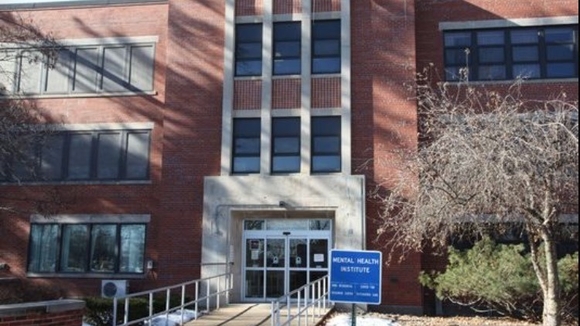
MHIThere is a petition on change.org to prevent the Branstad administration and the legislature from closing the doors of two of Iowa’s mental health institutions. It needs 725 signatures to reach 5,000.

www.change.org

People of Iowa: Keep Iowa MHIs Open

Gov. Branstad has made a proposal to shut down the Mental Health Institutes of Mt. Pleasant and Clarinda, Iowa. This petition is to support keeping them open, and keeping them funded.

Not only are there not enough beds to support everyone who would be affected by this, those that are working at these MHIs will be out of a job, or will be uprooted to move to the next closest MHI, which is in Independence, Iowa. This facility is 3+ hours away.

This proposal will ultimately not save money as the Governor states. It will cause extra money to be spent on other psychiatric units of hospitals and nurses of these hospitals, ultimately causing them to be spending more to support the influx of people.

Please sign this petition to help my Psych/Mental Health class of Iowa Wesleyan College lobby in Des Moines to support this cause. We are also affected seeing as our school, Indian Hills Community College, and Southeastern Community College all use this facility to train in the psychiatric clinical setting. Please help us keep them open!

Click here to sign the petition

Posted in Iowa legislature 2015 | Tagged , , | Comments Off on People of Iowa: Keep Iowa Mental Health Institutes Open