Hardship waivers for oil refineries. No, you can’t make it up. Listen to this rapid fire questioning of Scott Pruitt by Iowa’s only Democrat. Watch how the congressman doesn’t allow Pruitt to filibuster away his Q&A time. Iowa needs to send more Democrats to congress in 2018. Dave can’t do it alone.
VIDEO: Loebsack Questions EPA Administrator Pruitt’s Commitment to RFS
Washington, D.C. – Congressman Dave Loebsack questioned Environmental Protection Agency (EPA) Administrator Scott Pruitt today at an Energy and Commerce Committee hearing about reports that he has granted “hardship” waivers to numerous oil refiners, including one that made $1.5 billion in profits last year, when they are typically used to support small refiners that are facing economic hardship and are in danger of closing. At the hearing Loebsack pressed Pruitt to be transparent, fully accountable and to release all of the information on how many waivers have been granted and to whom they were granted. Additionally, under current law, any gallons that are waived are required to be obligated to other parties. Due to the lack of transparency, Pruitt was not able to state on the record whether these gallons have been properly reassigned as required by law.
Today, Loebsack also joined with his fellow co-chairs of the House Biofuels Caucus calling on Pruitt to cease all hardship waivers under the RFS until they are able to verify that the waivers will only be used for small refineries.
“Throughout Administrator Pruitt’s confirmation process, he stated that he would work to uphold the RFS. Additionally, President Trump has pledged to support the RFS time and time again. However, over the past several weeks new information has come out that makes me question this administration’s commitment. Various reports have indicated that the EPA has granted “economic hardship” exemptions to numerous refiners who are appear to be neither small nor financially distressed.
“I’ve heard directly from Iowans and farmers across the country who are extremely troubled by the EPA’s actions. This comes at a particularly troubling time as farm income is trending downwards and refining industry profits are soaring. I am extremely disappointed that the EPA issued these waivers as well as the unacceptable lack of transparency and accountability in this process. The granting of hardship waivers must cease until it has been verified that they are being used in a lawful manner.”
(Washington, DC) — The following is a statement from Nancy Altman, President of Social Security Works, in reaction to nearly every Republican member of the House of Representatives, as well as seven Democrats, voting for a Constitutional amendment requiring that all annual revenue and spending balance every year. The amendment failed to attain the two-thirds majority required to pass it into law:
“Every pay period, starting with our first jobs, America’s workers contribute to Social Security. The program uses those funds to pay all benefits and related administrative costs. Social Security does not add even a penny to the deficit, as Republican President Ronald Reagan so clearly stated when he was president.
When Social Security runs a surplus, Social Security holds the funds in trust. Social Security currently has a $2.9 trillion accumulated surplus, which was intentionally built up over decades to cover the retirement of the Baby Boom generation. In the guise of a so-called balanced budget amendment, 233 members of the House of Representatives just voted to pretend that the accumulated surplus does not exist.
That’s because the so-called Balanced Budget Amendment would ignore the past Social Security contributions and instead require all federal spending – including Social Security spending – to be offset by revenues collected in that same year. That means that Social Security would not be allowed to use its own $2.9 trillion surplus to pay out benefits.
By voting to mandate that income and outgo match for all federal spending every year, ninety-seven percent of Republicans just voted in effect, to default on Social Security’s $2.9 trillion worth of Treasury bonds. (Ninety-six percent of Democrats voted to honor their commitment to the American people.)
That 233 politicians would vote to raid the Social Security trust funds, never to repay them, is shameful. It helps explain the low regard the American people have for Congress. Fortunately for Social Security beneficiaries, the amendment did not attain the two-thirds majority required to pass the House. But those who voted for it are now on the record in support of stealing the American people’s earned Social Security benefits.”
More information on why the so-called balanced budget amendment is a backdoor attack on Social Security is here. A list of the Members of Congress who voted for the so-called balanced budget amendment is here and on the graphic below. Click here to share the graphic on Facebook.
Note: All there Iowa republican congress members Blum, King and Young) voted for this. Do not let them get away with this!
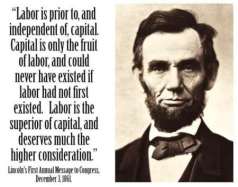
Tuesday will be International Workers Day. We simply do not give enough due to America’s workers. These days workers are being hammered from all sides, but especially from our national government and many state governments. These governmental units seem to be working overtime to bust unions and get as much labor as possible for the lowest price. This is a very short-sighted vision that will eventually kill the golden goose.
So stop for a few moments Tuesday and give a little thought to where we would be without the working men and women who made this country great.
We could almost do a full book on just last Thursday. But we will try to cover the week and the world with challenging questions:
Speaking of Thursday, what cabinet member made a contentious appearance before two House committees Thursday?
Perhaps the big news of the week was that what two long time adversaries announcing they would be working toward a peace?
Holy Moley! What US House functionary who had been removed unexpectedly from his duties by Paul Ryan was announced this week?
The Goldman Environmental Prize this year went to a citizen who helped expose a huge water quality problem in what city?
What highly placed physician admiral was known by his staff as the “candy man” for handing out medications without prescriptions?
April 29th, 1945 this couple that had been together for a long time tied the knot in a bunker under Berlin for a marriage that only would last one day?
Sexual harassment stories continue to abound. What well known comedian was convicted of sexual assault as his lengthy trial ended in Philadelphia?
Accusations of sexual harassment were leveled at what legendary retired NBC anchor Friday?
Europe comes calling! What two major European leaders visited Dear Leader at the White House this week?
Multiple fatalities and injuries were reported when a van mowed down pedestrians in what major North American city Monday?
During a wide ranging call to Fox and Friends Wednesday who admitted that Michael Cohen represented him in the “Stormy Daniels deal”?
Continuing his great day Thursday, Dear Leader threatened repercussions to countries who didn’t vote for the US to host what world event in 2026?
Sporting the second lowest approval vote ever, who was approved by the US senate to be Secretary of State Thursday?
Dear Leader threatened to leave what trade talks if ending the flow of undocumented migrants from Mexico is not made a part of the pact?
What senator led the fight against Dear Leader’s nominee to head the VA?
In a special election in a ruby red congressional district in what state did the Republican candidate eke out a 4 point victory Tuesday?
In Iowa, Republicans are doing battle with what group over the new state budget?
Teachers in what two states staged protests and shut down schools Thursday and Friday?
What US senate committee surprisingly voted 14 – 7 to approve a bill to protect Special Counsel Robert Mueller?
In Texas a man was given probation and a small fine in the killing of his neighbor. The defense claimed the male victim had done what to the killer which caused him to panic and kill the victim?
John Fugelsang: “House Intelligence Committee Republicans declare there was no collusion btw DT campaign & Russia which is why you should ignore 19 indictments, 4 guilty pleas & Don Jr emailing “collude at me, bro.”
Answers:
Scott Pruitt of the EPA
North and South Korea
House Chaplain Rev. Pat Conroy
Flint, Mich.
White House physician Ronny Jackson
Adolf Hitler and Eva Braun – they committed suicide the next day
Bill Cosby
Tom Brokaw
Emmanuel Macron of France and Angela Merkl of Germany
Toronto
Dear Leader
The World Cup
Mike Pompeo – Rex Tillerson had the lowest approval vote ever
NAFTA – this would really hurt Iowa
John Tester of Montana
Arizona
Other Republicans
Colorado and Arizona
The Senate Judiciary Committee
Made sexual advances that caused the killer “gay panic.” Texas is one of the few states that have such a defense.
From nearly a year ago, Andy Borowitz explains how Dear Leader makes it hard for satirists (length 1:37)
One of the frequently noted similarities of the economy between today and and just prior to the 1929 collapse is the strikingly similar concentration of wealth into a few hands. We almost bit the bullet of a major economic collapse in 2007-2008 after a round of Republican economics put us in an inequality set up like we had in 1929.
After some amazing heroics by Democrats that were fought tooth and nail by Republicans, the country was pulled away from the brink. Unfortunately despite this close call with disaster, the American people once again restored the Republican Party not just to the president, but to control of all branches of government. And the concentration just picked up again.
Data from last Decemberhad the concentration of wealth for the top 1% of Americans at 40% of the economy. The top 20% had 90% of the economy leaving the rest of us to fight over that last measly 10%.
That is foreboding. America’s best economies took place when wealth was much less concentrated and was kept that way through governmental policies that did tax the rich and did help the poor. But those days are long gone. In their place we have the infamous “trickle down” economics. This was once known as the “horse poo” economics.
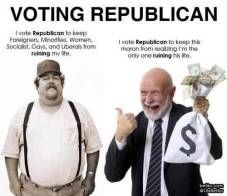
While the horse poo economics has fairly well ensured a widening and almost permanent social strata, Republicans seem to want to make it even worse. Through policies enacted at local, state and national levels they punish the poor in nearly every aspect of their lives from forcing births to impoverishing public schools to ensuring a low wage economy though “right to work” laws and union busting policies to cutting off government aid and nutrition programs and of course doing all they can to make health care unaffordable and unattainable for the poor.
In this vein, perhaps the holy grail of the Republican Party is to end Social Security, Medicare and Medicaid. If they can’t end these programs the next goal is to turn them into “privatized” versions where the upper 1% skim huge profits off the skeletal remains of these once great programs. We in Iowa have had a front row seat to what a disaster “privatization” can create.
It is not hard to envision what this country will look like in a few more years of policies geared to enrich the wealthy and impoverish anyone not wealthy. Wealth will dominate policy decisions even more than it does today (is that even possible?) as the political class becomes more and more dependent on wealthy donors for campaigns.
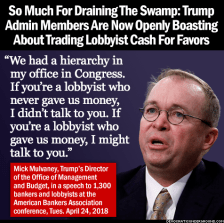
OMB Director Mick Mulvaney was pretty direct last Wednesday when he let it be known at a bankers’ gathering that Republicans will do what they want if they get the “campaign contributions” (bribes) they want. Can’t be much clearer than that can you?
hat tip to democraticunderground.com
All is not lost yet, but time is going fast. Democrats have unveiled policy proposals in the past few days that can give us all hope. One such proposal is Medicare for all citizens as an opt in program. The proposal I read would have a sliding scale premium based on a person’s economic status.
Another proposal from Sen. Corey Booker of New Jersey would guarantee a job for every citizen. Thus those who for some circumstance or another couldn’t work in a traditional job could be fitted to some work. Heavens knows there is more work that needs to be done in this country that there are workers. Do we have the political will to take on this challenge?
Many folks from Bernie Sanders on the national level to our state Democratic gubernatorial candidates have been emphasizing access to education and the need to make post secondary school affordable if not free.
Democrats from the state house to the congress continue to stress the need for livable wages. How can anyone ever be expected to escape poverty when prevailing wages can’t even support half a person? Having a living wage indexed to inflation would go a long ways toward reducing poverty.
Many folks who are currently getting some kind of government aid would most likely not need help with a livable wage and the ability to opt in to Medicare. While Republicans try to force the poor to work for poverty wages in order to get a meal, it just makes more sense to put the burden on the business community to pay living wages as a cost of doing business. Why should taxpayers have to subsidize their employees?
The graphic below shows a quick comparison between two very similar states going different directions:
Other countries throughout the world can do it yet the richest nation on earth can’t handle a living wage structure? This sounds like a question that was settled about 150 years ago.
About a month ago – it is almost hard to keep track of time in the current rush of news – Iowa suddenly found itself smack in the middle of a trade war that it had nothing to do with. The man whose hobby is playing president threatened to impose tariffs around the world on aluminum and steel.
In reality our Dear Leader was aiming specifically at Chinese imports, but instead sent out a shotgun blast. The Chinese were hardly fooled. They responded with some tariffs of their own that were much more strategically targeted. China aimed their tariffs at major products from states that went heavily for Trump in the 2016 election or had top Republican politicians. Among the targets were bourbon from Kentucky and corn and soybeans from many midwestern states, especially Iowa. Sorghum from Texas, Kansas and Arkansas was also hit hard.
The blowback from the tariff policy was just another in a line of simply stupid trade decisions made by the administration.
During the campaign Candidate Trump said he would pull the US from the Trans-Pacific Partnership (TPP). Upon inauguration, he did just that. Speculation was that US withdrawal from the TPP would sink the organization. Instead, Japan took up the mantle of leadership. Eleven countries signed an updated TPP known as the Comprehensive and Progressive Agreement for Trans-Pacific Partnership (CPTPP) in March without the US.
One of the goals of the TPP was to mitigate China’s power in trade in the Pacific area. Based on the tariffs that the administration imposed unilaterally that was the administration’s focus also. Without the trade partnership, the US was singularly exposed when it imposed tariffs.
At the same time the administration was in the process of screwing up deals in the Pacific it was also trying to impose its will by reopening NAFTA to get some much more US friendly provisions. The administration felt it could dictate terms to our long time and best trading partners. Canada and Mexico also wanted to do some renovations, but they had their own ideas for changes that did not favor the US.
Currently negotiations are in a slog. Let us hope that our arrogance doesn’t totally sink NAFTA. Canada and Mexico have taken out a little insurance against NAFTA by joining the TPP. Mexico even went one step further last week by inking a trade pact with the European Union late last week. From CNN:
Mexico and the EU said last year they would accelerate their talks to update a trade agreement signed in 2000 as the United States threatened to slap tariffs on Mexican imports and withdraw from NAFTA.
Officials appeared to take a jab at US President Donald Trump’s policies in statements praising the Mexico-EU deal as a defense of “open” and “rules-based” trade.
“Mexico and the EU worked together and reached a mutually beneficial outcome,” said European Commission President Jean-Claude Juncker. “We did it as partners who are willing to discuss, to defend their interests while at the same time being willing to compromise to meet each other’s expectations.”
The deal marks a move by Mexico to pivot away from its reliance on trade with the United States.
One US sector which may be taking a major hit from this trade pact is the dairy industry. dairyreporter.com reports that the new pact opens up markets for both European and Mexican dairy industries that will probably come at the expense of the US dairy industry. The US dairy industry is already in some serious straits, with dairy farms closing around the country.
While Mexico and Canada look to protect trade for their countries, China has not been sitting idly by as the US administration talks trade wars. China has been putting together a group called the RCEP or Regional Comprehensive Economic Partnership. From a David Cay Johnston interview:
Trump, of course, claims we’ve made all these terrible deals, but instead of seeking new ones after cancelling the Trans-Pacific Partnership (TPP) and ignoring the new Euro Japanese agreement, he’s done nothing. Nothing. So who has that benefitted? Well, I don’t know if you’ve ever heard of the RCEP, but that’s China’s Regional Comprehensive Economic Partnership. China has gotten 15 pacific rim countries plus India in a new trade pact, and basically Chinese diplomats are saying to these counties, “Look at what’s happening to America. It’s falling apart. Look at who’s the president. If you want a prosperous future, tilt away from Washington, and pivot toward us.” Australia is by far our most loyal ally, but the Australian government is pivoting away from Washington towards Beijing. Over time, that will cost American jobs, American wealth, and it’s going to help China expand both its economic, political and its military power in the pacific to our detriment.
While our media concentrates on the explosion of the day around the administration, our failing trade systems go pretty much unreported by the major outlets.
The instability now and possible failure in the future will have huge implications in Iowa’s farm based economy.
Got this email from Iowa CCI Thursday looking for stories from farmers concerning the new Farm Bill that is weaving its way through the Republican controlled US House and US Senate. If you haven’t heard, this bill has many repugnant pieces. From the email:
This year’s Farm Bill is heating up.
We’ve seen the first draft – and it doesn’t look good. Even though independent family farmers are hurting right now, Members of Congress are content with fewer restrictions for Big Ag corporations at the expense of our health, air, and water.
We know farmers are trapped in a system of that is largely dictated by Big Ag. That’s why Iowa CCI members are making sure federal policies stop propping up the factory farm industry by zeroing in on two Farm Bill programs: the Environmental Quality Incentives Program (EQIP) and federal direct and guaranteed loans.
Both of these programs are important: they were created to support conservation and help beginning family farmers. But, over time, they were hijacked to divert millions of dollars toward constructing factory farms.
If you’re a farmer, I’m writing to ask for your help. We want to learn more about your experience using these two programs.
Your input really matters to us! We know this is a busy time of year for you as fieldwork begins. But, your feedback will help us understand how these programs are – and are not – working for family farmers. Take a few minutes to fill out the survey by clicking here.
I truly appreciate your time. Together, we can fight for a fair Farm Bill that works for independent family farmers – not the factory farm industry!
Sincerely,
Erica
Community Organizer
P.S. Not a farmer, but know a farmer? Please forward this on!
Perhaps the most notable program elimination is that of the Conservation Stewardship Program (CSP), which currently offers support to farmers undertaking conservation activities on over 70 million acres of land across the country. Without CSP, farmers would have no assistance to implement whole-farm conservation plans, which would result in less resilient farms and increased pollution. The money from CSP wouldn’t be funneled into other conservation programs, either; the draft Farm Bill proposes to cut funding for all working lands conservation programs by $7.1 billion (20 percent) over 10 years. To make things worse, CAFOs would be eligible to receive more conservation dollars than they have in the past. This would make funding even more scarce for farmers wanting to implement meaningful conservation plans on their land.
The draft Farm Bill isn’t only bad for farmers; it would also deal a blow to people who need nutrition assistance. The draft Farm Bill increases work requirements for all able-bodied adults of working age, including parents, in order to be eligible for SNAP benefits. The draft Farm Bill would also make it more difficult to get waivers from the work rules. Currently, 3.5 million SNAP recipients are subject to work rules. The provisions in this bill could raise that number to between 5.5 and 6.5 million. This bill offers no leeway for people who are temporarily unemployed or who have certain other life circumstances limiting their ability to work.
Pretty obvious that this bill will have a major effect on farming states like Iowa.
Add this major piece of incompetence to the incompetence that the current administration has shown by threatening the world with tariffs. We will discuss tariffs and trade negotiations in part 2.
Published withpermission from the Spring 2018 issue of The Prairie Progressive, Iowa’s oldest progressive newsletter. The Prairie Progressive is funded entirely by reader subscription, available only in hard copy for $12/yr. Send check to PP, Box 1945, Iowa City 52244.
As a Democratic candidate to succeed Senator Bob Dvorsky, I’ve spent the last four months traveling all over Johnson, Cedar, and Muscatine Counties listening to voters and in April, my campaign will visit every single community in District 37. Many of the top issues I hear about are what I expected — our beleaguered health care system, devastating education cuts, the assault on workers’ rights. Beyond these “kitchen table” issues,
however, there is no set of issues I am asked about more frequently than protecting our natural resources.
I’m best known for my speech about marriage equality to the Iowa legislature, which turned me into an overnight activist for same-sex marriage and LGBTQ rights in our state. At the time I gave that speech, however, I was a civil and environmental engineering student at the University of Iowa hoping to work in either the renewable energy industry or environmental protection.
As an Eagle Scout, I developed a deep commitment to leaving the world a better place than we found it. That commitment led me to environmental engineering and then, when given the opportunity, to continue my advocacy for families all, over Iowa. And now, we all have a commitment to fight for tomorrow’s families, too, and making sure that we leave our state in better shape than we found it. Part of the challenge is that “better shape” has often been a moving target.
Because we are always learning more about how our actions affect our environment, what seemed “normal” or “better” five or ten (or fifty) years ago may be understood differently
today. But solving problems means a willingness to update how we see the world. Changing our worldview and our practices can be exceptionally difficult, but we owe it to each other and to future generations to do this work.
We need an updated approach to resource management that values the health and prosperity of our communities and makes sure future generations have the same opportunities as past generations. Specifically, we need new strategies and solutions
to water quality, climate change, air quality, clean energy, and mitigating the impact of concentrated animal feeding operations or CAFOs.
Early in 2018, the legislature passed a $280 million water quality bill, which sounds like a lot. But experts I’m speaking with at the University of Iowa believe this is at least a $4
billion problem. The Republican solution is a drop in the water quality bucket. In 2014, the Iowa DNR reported that 80% of our water bodies could be impaired and in need of clean up under the Clean Water Act.
A better water quality plan should establish a dedicated funding source for larger investments without taking the money from our schools and other infrastructure projects, include monitoring efforts to track water quality progress, and foster partnerships within Iowa watersheds to encourage Iowans to work together toward a cooperative vision for cleaner water.
There should be no doubt that climate change is among the greatest threats facing future generations. Iowa will experience increased frequency of extreme weather events like the 2008 Floods. These events will impact our agricultural productivity, economic development, and public health. To address these threats, Iowa must help communities identify their climate-change vulnerabilities, invest in infrastructure improvements that
promote preparedness and resilience to extreme weather events, and maintain our position as an international leader in wind energy production while expanding that leadership to solar energy production as well.
Today, far too many Iowans worry about the levels of nitrates in their tap water or rely on private wells that may be contaminated with bacteria or arsenic. Many others live near
concentrated animal feeding operations (CAFOs) and fear health effects from the air they breathe. Iowa needs a stronger and fully funded DNR for reliable oversight and enforcement of environmental protections. We also need more dedicated resources for
smaller water systems and private well owners to improve access to clean and safe drinking water at every tap. To overhaul the process for CAFO siting and permitting, we need to update the DNR’s Master Matrix to better integrate environmental protections and address the concerns of affected communities.
Natural resources are a critical pillar of Iowa’s social foundation — the air we breathe, the water we drink, and the soil with which we grow our food. It’s that same social foundation
that the Iowa Republicans are dismantling in the legislature.
We must balance our obligations to feed the world with our responsibility to future generations of Iowans. It is our responsibility to do our best.
A renewed foundation starts with fully funding water quality efforts, preparing for a changing climate, and continuing to invest in wind and solar energy. Clean, renewable
energy is both good for environment and our economy.
It’s our state. It’s our responsibility to take care of it.
–Zach Wahls lives in Coralville and is running for the Iowa Senate, District 37.
Things are bad when the coop sends the suicide hotline number with the milk payment.
Milk prices are currently about $15 per hundred weight while cost of production at family farms is more than $22 per hundred weight. Like so many segments of agriculture, consolidation is driving down costs and small farmers are going out of business.
“The nation’s dairy farmers are again in dire straits, just like we were in the 1980s,” Jim Goodman, Wisconsin dairy farmer and board president of National Family Farm Coalition said in a press release. “Proposed safety nets are totally inadequate and without real long-term market reform, dairy farmers will continue to lose their farms. Consumers who care where their milk comes from and policymakers claiming to care about rural America must support these steps to ensure farmers a fair price. Without immediate government action, the days of the small dairy farm are numbered.”
A key component of government action would be to establish a floor for milk pricing at $20 per hundred weight which would provide immediate relief for farmers in debt and unable to pay bills.
“Dairy farmers today are facing no money, no hope, no way to plant spring crops or pay last year’s debts,” Pennsylvania dairy farmer Brenda Cochran, said in the press release. “Nothing will stop the financial hemorrhage we are facing except a better farm milk price.”
Dairy farmers are coming full circle, sort of.
In 1933, Congress passed the Agricultural Adjustment Act as part of President Franklin Roosevelt’s New Deal. Among other things, the AAA was designed to boost agricultural prices (including milk) by reducing excess production.
“Farm programs in America were originally created as a way to shrink the great mountain of grain, and for many years they helped to do just that,” Michael Pollan wrote. “The Roosevelt administration established the nation’s first program of farm support during the Depression, though not, as many people seem to think, to feed a hungry nation…. but to help farmers reeling from a farm depression caused by … collapsing prices due to overproduction.”
Fast forward to President Richard Nixon and his Secretary of Agriculture, Earl Butz, in the 1970s. Facing political pressure due to high food prices, Nixon ordered Butz to do whatever was necessary to drive down the price of food.
“Butz implored America’s farmers to plant their fields ‘fence row to fence row,’” Pollan said, “and set about dismantling 40 years of farm policy designed to prevent overproduction.”
Food prices have not been high enough to engage consumers ever since. That brings us to today’s dairy crisis.
“I have a hard time imagining how we can conserve farmers without some kind of production controls to curb the overproduction that causes the ag markets to crash,” dairy farmer Francis Thicke wrote on the Practical Farmers of Iowa list serve. “Are American farmers even open to considering production controls?”
The National Family Farm Coalition believes they must be and outlined aspects of a government program to ease oversupply:
Setting an immediate floor price of $20/cwt for milk used to manufacture dairy products;
Establishing a milk product purchasing initiative by utilizing U.S. Department of Agriculture’s authority under 7 USCS Section 612c, commonly referred to as Section 32 surplus removal;
Placing an immediate moratorium on Environmental Quality Incentives Program (EQIP) funding and direct and guaranteed loans for concentrated animal feeding operations (CAFOs);
Holding hearings on the milk pricing formula and the dairy crisis;
Implementing a supply management program as outlined in the proposed Federal Milk Marketing Improvement Act of 2011 to stabilize milk production.
It’s clear from watching the Republican controlled federal government that small dairy farmers are on their own. It’s hard for consumers to react when the price of cheese and other dairy products is down and milk sells for less than $2 per gallon. In this scenario, something’s got to give. Unless the federal government steps in with production controls it will be family dairy farmers.
This is an important speech by Governor Tom Vilsack where he discusses (1) how today is not unlike twenty years ago, (2) what Democratic leadership is, and (3) how Democrats win in 2018. This speech illustrates how a mild mannered guy with virtually no name recoognition became governor of Iowa. April 14, 2018
Governor Kim Keynolds: (515) 281-5211 U.S. Capitol Switchboard: (202) 224-3121 Iowa Members of Congress - Rep. Randy Feenstra (R) - Rep. Ashley Hinson (R) - Rep. Mariannette Miller-Meeks (R) - Rep. Zach Nunn (R) Iowa US Senators - Senator Joni Ernst (R) - Senator Charles Grassley (R)




 Published with permission from the Spring 2018 issue of The Prairie Progressive, Iowa’s oldest progressive newsletter. The Prairie Progressive is funded entirely by reader subscription, available only in hard copy for $12/yr. Send check to PP, Box 1945, Iowa City 52244.


