
Iowans
React to the Gulf Oil Spill
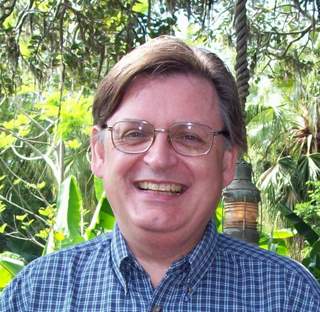 by Paul Deaton
“If we knew how to cap Spindletop,
by Paul Deaton
“If we knew how to cap Spindletop,it is clear that BP lacks the skills to stop the deep water gusher they
created in a timely manner. Unlike the oil of the Lucas Gusher, the oil
flowing from the basin of the Gulf of Mexico seems unlikely to be
recovered and used.”
One has to
agree with New York Times columnist and author Thomas Friedman that
President Obama’s handling of the Oil Spill in the Gulf of Mexico has
been disappointing. As Friedman puts it, “Why is Obama playing
defense? Just how much oil has to spill into the gulf, how much wildlife
has to die, how many radical mosques need to be built with our gasoline
purchases to produce more Times Square bombers, before it becomes
politically “safe” for the president to say he is going to end our oil
addiction? Indeed, where is ‘The Obama End to Oil Addiction Act’?” If
this oil spill does not serve as a wake-up call regarding the challenged
future of a hydrocarbon-based economy, then little else will.
As I watch the live video of oil
flowing out of the ocean floor, it reminds me of Spindletop. What is
Spindletop? It is a salt dome oil field that struck oil on January 10,
1901 near Beaumont, Texas. When the operators drilled to 1,139 feet, it
released the pressure on an enormous basin of oil from the Jurassic age
and created the Lucas Gusher. The Lucas Gusher flowed at a rate of
100,000 barrels of oil per day for 9 days before being capped and put
into production. By the end of the next year, there were 285 oil wells
and 500 companies at Spindletop and these reserves single-handedly
created the Texas
Oil Boom. By 1903, production had declined to less than 10,000
barrels per day. Drilling deeper, to a depth of 2,500 feet, in 1925 a
new reserve was struck, resulting in peak annual production of 21
million barrels in 1927.
The idea of a gusher of oil fueling
the economy is ingrained in the popular imagination. For a while, the
United States was the world’s largest producer of oil. Things are
different now. As they say in Texas, “God grant me one more oil boom and
I promise not to piss it away.” Now look at the live video of the
Gulf of New Mexico oil spill. If we knew how to cap Spindletop, it is
clear that BP lacks the skills to stop the deep water gusher they
created in a timely manner. Unlike the oil of the Lucas Gusher, the oil
flowing from the basin of the Gulf of Mexico seems unlikely to be
recovered and used.
What does this mean to Iowans? A
friend wrote on Facebook, “Ok, the images of the oil leak are making me
feel guilty about driving a jeep.” At
the political fundraiser last week, a number of Prius Hybrid
vehicles were parked outside the event on the street. Another Iowa
couple I know participates in “voluntary simplicity,” also known as “simple living,”
which was a 20th century reaction to the rise of our consumer culture.
These things serve to illustrate that many Iowans believe that their
personal consumer behaviors contribute to the demand for oil that
resulted in the advancement of off shore drilling before we had the
capacity to manage the gusher we sought and found there. Who could argue
with that?
My thinking is different; our
consumer society has an over-reliance on gushers and the “next big
thing.” When off shore oil drilling becomes such an expensive and
gigantically scaled operation, only a few private companies have the
access to capital to be in that business. As the developing scandal
with the United States Minerals Management Service demonstrates,
government cannot be trusted to manage the relationship with these
companies. This situation can only be solved by the body politic and
I don’t believe we need to feel guilty, buy a Prius or give up the
things we truly enjoy.
I remember hearing Barack Obama’s
first speech in Iowa at the 2006 Harkin Steak Fry. To me, it echoed of
Ted Kennedy’s question of the day, “had enough?” I was not impressed by
the old sawhorses carted out of the tool shed by this young politician.
There was something else. Before attending the Steak Fry, I listened to
Obama’s keynote
address at the 2004 Democratic National Convention and this phrase
stood out, “do we participate in a politics of cynicism, or do we
participate in a politics of hope?” While some focus on hope, it is the
word “participate” that was inspiring to me.
If the Obama administration is
making a political calculus in dealing with the Gulf Oil Spill, that is
to be expected from a Washington of politics as usual. As Howard Dean
said in his 2004 book You Have the
Power, “We need political institutions that people can believe
in.” If President Obama inherited the problems of the Minerals
Management Service and their apparent lack of oversight of off shore oil
and gas exploration, then it is up to his administration to quickly fix
the problem and provide needed credibility. This, even if the damage in
the Gulf of Mexico is already done, even if there is a political cost.
The administration must take positive and bold action to address the Oil
Spill and the business environment that created it.
In addition, as
Friedman suggested, “In the wake of this historic oil spill, the right
policy — a bill to help end our addiction to oil — is also the right
politics. The people are ahead of their politicians.” The
administration should do what is right and support the Lieberman-Kerry
energy bill with vigor. There may be political consequences for doing
so. There are real world consequences for a failure to act. What
disappoints us is the appearance of politics as usual. We continue to
have hope for better than that. ~Paul
Deaton is a native Iowan living in rural Johnson County and weekend
editor of Blog for Iowa. He is also a member of Iowa Physicians for
Social Responsibility and Veterans for Peace. E-mail Paul
Deaton
Please
participate in our democracy by clicking here to provide
feedback to the administration on the Gulf of Mexico Oil Spill.
participate in our democracy by clicking here to provide
feedback to the administration on the Gulf of Mexico Oil Spill.
 Blog For Iowa
Thanks, Paul, for your post and the link. I sent my e-mail to the White House. just now.
LikeLike
http://www.reuters.com/subjects/gulf-oil-spill
Qin Chen, an associate professor of civil and environmental engineering at Louisiana State University in Baton Rouge:
The ecological catastrophe in the gulf of Mexico can be compared to the Chernobyl nuclear accident. Millions of gallons of oil are already in the Gulf of Mexico, and until now BP engineers failed to stop the leak.
The tornado season which has started recently in the Mexican gulf can geographically coincide with the oil spill. The oil emerging into the tornado can be air diffused. It is still debated whether the oil dispersed as an aerosol can reach explosive quality. That this situation is far from hypothetical was demonstrated by the U.S. “mother of all bombs” and the Russian “dad of all bombs”. Based on the same dispersion principle, with 16,000 lbs of explosive aerosol inside, it is equivalent to 88,000 pounds of TNT.
The amount of the oil dispersed in a form of an aerosol in the tornado epicenter can be enormous. The extreme explosive capacity of the oil aerosol might affect numerous economically important centers in the U.S.
What does the U.S. government do to prevent this explosive situation?
LikeLike