
Muscatine Iowa and a Triple Bottom Line
 by Paul Deaton
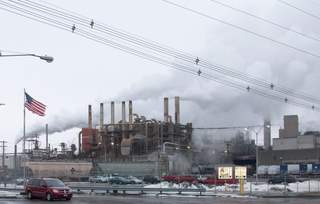
Grain Processing Corporation may have already received return on its proposed $75 million investment in a new grain dryer in Muscatine when Mayor Richard O'Brien said the company's plans should “make a tremendous difference on air quality in a short period of time. They're spending a lot of money and working very hard to make it better for everyone who lives in the city,” according to the Des Moines Register. Spending a lot of money and working hard are American values and this kind of favorable publicity, from a person with standing in the community, is something Grain Processing Corporation sorely needs. It comes only after a campaign of reputation management. Whether the mayor's assertions about improvement of air quality are accurate is another story.
by Paul Deaton
Grain Processing Corporation may have already received return on its proposed $75 million investment in a new grain dryer in Muscatine when Mayor Richard O'Brien said the company's plans should “make a tremendous difference on air quality in a short period of time. They're spending a lot of money and working very hard to make it better for everyone who lives in the city,” according to the Des Moines Register. Spending a lot of money and working hard are American values and this kind of favorable publicity, from a person with standing in the community, is something Grain Processing Corporation sorely needs. It comes only after a campaign of reputation management. Whether the mayor's assertions about improvement of air quality are accurate is another story.
In 2006, Muscatine County District Court Judge J. Hobart Darbyshire entered judgment against Grain Processing Corporation, “assessing a $538,000 civil penalty for air pollution control violations and requiring other measures to prevent air pollution in the future.” The judgment pertains, in part, to the company's violation of laws that regulate emission of particulate matter 10 microns in diameter or larger. A half a million dollar judgment would be a minor annoyance compared with the broader problem Grain Processing Corporation would have to face if they failed to bring plant operations into compliance with clean air regulations.
Judge Darbyshire's judgment occurred in the context of a tightening of regulations for particulate matter, with the new measurement being 2.5 microns. The company would have been required to improve emissions in any case, whether they stayed in Iowa or moved to another state. So this week's announcement, framed as a move on Grain Processing Company's part to improve Muscatine air quality, is a Pyrrhic victory, forced by appropriate and increasing regulation by the Environmental Protection Agency and the Iowa Department of Natural Resources.
In the book The Triple Bottom Line, Andrew W. Savitz and Karl Weber frame what it means to be a sustainable company.
Grain Processing Corporation is a privately held corporation, and not required to release a financial statement, let alone a Triple Bottom Line. One presumes a company that can invest in new equipment and pay half a million dollar fines has adequate sales, cash flow and profit to make a return on investment for its owners. From an economic standpoint, they seem to be doing well.
From an environmental standpoint, Grain Processing Corporation, a habitual violator of air quality standards, with this week's announcement, appears to be seeking to comply with the law. In doing so, it was able to finance new equipment to comply with new air quality regulations. To the extent the company continues to comply with environmental regulations, they should be allowed to continue to operate. The better question is are the regulations adequate to protect air and water quality in Iowa? That is subject for a different post. Iowa needs well capitalized companies to operate here and contribute to the local economy. The environment should not be compromised when attracting them.
Where Grain Processing Corporation fell short was in managing their corporate reputation in the form of labor practices and community impacts. Blog for Iowa posted previously on community attitudes.
United Food and Commercial Workers Local 86D, whose members were locked out August 22, 2008, presents attitudes about Grain Processing Corporation on their web site, “contract negotiations broke down because GPC wanted the ability to outsource UFCW members’ jobs – at any time, for any reason.” This statement and others like it reflects a lack of trust between the company and the community and the weakest entry on Grain Processing Corporations Triple Bottom Line, if they were to keep one.
The point is, that neither should Grain Processing Corporation be vilified for trying to manage its business, nor congratulated, as they were this week, for “spending money and working hard.” Like all corporations, return on investment for the owners is a paramount consideration. Despite their success in reputation management this week, the company has a long way to go to bolster its reputation in the community. This is something money should not be able to buy, despite a company's new capital investments in the community.
~Paul Deaton is a native Iowan living in rural Johnson County. E-mail Paul Deaton
 Blog For Iowa