
Iowans See Another Side of CAFTA
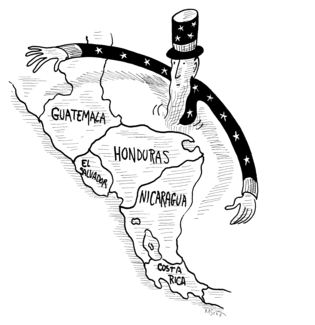 by Paul Deaton
[Editor's Note: A lot of requests cross the editor's desk at Blog for Iowa, and in this case, the issue presented has not been aired at all in Iowa as far as we can tell. One of our roles is to report news others don't].
Following is an important letter to President Obama before his visit to El Salvador on March 22-23, 2011, his first Presidential tour in Latin America. His visit is an critical opportunity to bring international attention to an urgent threat to El Salvador’s sovereignty, human rights and environment.
by Paul Deaton
[Editor's Note: A lot of requests cross the editor's desk at Blog for Iowa, and in this case, the issue presented has not been aired at all in Iowa as far as we can tell. One of our roles is to report news others don't].
Following is an important letter to President Obama before his visit to El Salvador on March 22-23, 2011, his first Presidential tour in Latin America. His visit is an critical opportunity to bring international attention to an urgent threat to El Salvador’s sovereignty, human rights and environment.
As you may know, two North American mining companies are suing El Salvador under the foreign investor provisions of the US-DR-Central America Free Trade Agreement (CAFTA). Pacific Rim Mining, a Canadian company that transferred a subsidiary to Nevada to take advantage of CAFTA, is suing El Salvador for at least $77 million for the government’s decision to deny their application for gold extraction. Commerce Group Corporation, based in Milwaukee, WI, is suing El Salvador for $100 million for canceling its existing exploitation permit on the grounds of environmental devastation to the San Sebastian River.
Unfortunately, death threats and kidnapping attempts against community leaders, journalists and religious leaders in Cabañas who continue to denounce metallic mining are continuing today.
We believe that the United States, as the chief architect of DR-CAFTA, has a moral and political obligation to take concrete action to support El Salvador’s position in the face of these CAFTA lawsuits. The letter thus calls on President Obama to take several actions before and during his visit to El Salvador on March 22-23 (see below), including eliminating these rights for foreign corporations as he promised to do during his campaign.
Thank you!
En solidaridad,
Alexis Stoumbelis on behalf of the International Coalition against Mining in El Salvador and the Midwest Coalition Against Lethal Mining.
President Barack Obama
White House
1600 Pennsylvania Ave.
Washington, DC 20508
USA
Dear President Obama:
On the eve of your upcoming trip to Latin America, we are writing to raise an urgent concern for the people of El Salvador. El Salvador is currently facing two investor-state arbitration suits filed under the provisions of the Dominican Republic-Central America-United States Free Trade Agreement (CAFTA-DR) for the government’s decision not to grant permits for metallic mining.
The environmental regulations at issue here are exactly the type of policy you pledged to protect as a Presidential candidate when you stated, “With regards to provisions in several FTAs that give foreign investors the right to sue governments directly in foreign tribunals, I will ensure that foreign investor rights are strictly limited and will fully exempt any law or regulation written to protect public safety or promote the public interest.”
As shown in neighboring Guatemala and Honduras, metallic mining can irreparably pollute fresh drinking water, contaminate water used for crop irrigation, and pose grave threats to fishing livelihoods, thus permanently endangering the health and well-being of generations. El Salvador, the smallest and most densely populated country in Central America, already grapples with severe shortages of clean water.
It was for these reasons, and the failure of two companies, Pacific Rim Mining and Commerce Group Corporation, to fulfill the requirements of El Salvador’s mining law, that the Ministry of the Environment and Natural Resources rejected Pacific Rim’s application for exploitation permits in 2005 and revoked Commerce Group’s exploitation permit in 2006.
Rather than applauding El Salvador’s commitment to promoting the health of its citizens and protection of the environment, the United States, through its current trade policy, is allowing the people of El Salvador to be punished. Together, these two companies are demanding nearly $200 million dollars in compensation from the Salvadoran state, equivalent to one percent of the nation’s Gross Domestic Product (GDP). The U.S. equivalent, relative to GDP, is close to $276 billion. We hope you agree that the hundreds of millions of dollars at stake could be better invested by the Salvadoran government into economic growth and fundamental social guarantees like health and education.
The lawsuits by Pacific Rim Mining Company and Commerce Group Corporation against El Salvador demonstrate how the present terms of DR-CAFTA jeopardize the environment and public health throughout the hemisphere. When these expansive corporate rights impede a government’s ability to respond to its communities’ calls for positive environmental and economic policy, for example, El Salvador is currently considering a national ban on metallic mining, similar to the ban recently passed by Costa Rica, they can threaten human rights and even democracy itself.
The pending DR-CAFTA arbitration has provided a pretext for the Pacific Rim’s continued presence in the region of Cabañas, where three community leaders who opposed metallic mining were assassinated in 2009. While some of the perpetrators of these crimes have been prosecuted, the intellectual authors and financers of these crimes have not; death threats and kidnapping attempts against community leaders, journalists and religious leaders who denounce mining continue today.
On March 2nd, the communities and member organizations of the Mesa Nacional frente a la Minería Metálica (National Roundtable against Metallic Mining), who have been organizing to defend their land and water from the threat of metallic mining, presented amicus curiae to the tribunal at the International Centre for the Settlement of Investment Disputes (ICSID). We wish to express our support for the members of the Mesa Nacional and urge the Tribunal to honor the legitimate right of civil society to play an active role in this case.
During your upcoming trip to El Salvador, you have an important opportunity to offer concrete support to President Funes and to the people of El Salvador in the continued exercise of their sovereign right to develop economic, environmental and social policy that promotes the well-being of its peoples. We call on you to:
Cayman, LLC vs. El Salvador case after the next hearing on jurisdiction (March 26-30), and as necessary, in future hearings of the Commerce Group Corporation, to limit the sweeping interpretation of foreign investor rights. We believe the State Department should argue that Pacific Rim, a Vancouver, B.C.-based company that has used a newly-established subsidiary in Reno, Nevada in order to take advantage of US investor protections, has abused the process. If this instance of abuse is tolerated, it threatens all member countries, including the United States.
We, the undersigned organizations, believe that the United States government as the architect of DR-CAFTA has an obligation to act quickly and concretely to support El Salvador’s position with regard to the arbitration, and to address the underlying policy issues in DR-CAFTA that threaten the exercise of democracy throughout our hemisphere.
 Blog For Iowa