
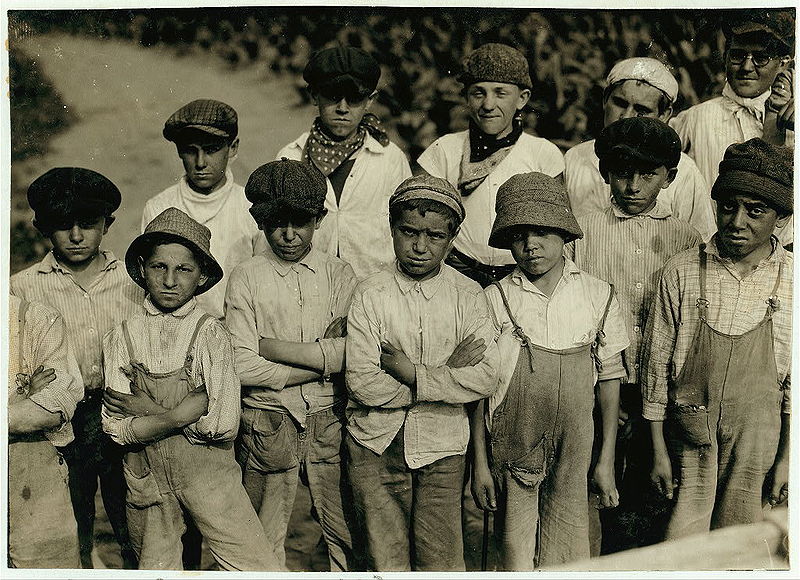
Field Workers
(Editor’s Note: This is the sixth and final article in a Blog for Iowa series about food and food pricing in Iowa, centered around a comparison shopping trip to buy ingredients for a bowl of vegetarian chili. Read the previous articles by clicking here, here, here, here or here).
Newly made chili, using a recipe I created myself and ingredients previously described, is bubbling in my Dutch oven in the kitchen. Although I have written about food pricing since May, I have one more thing to say. The incrementalism of tracking food prices, like the cost of a gallon of milk moving up 4.2% from $3.06 to $3.19 in the two months since the original survey, simply does not matter. There is something bigger at stake.
For Christmas one year, my gift was a 5-1/2 Quart Le Creuset Dutch Oven made in France of enameled cast-iron. At $245, it is easily the most expensive piece of cookware in the house. This information, that I am a Francophile when it comes to cookware, is an indicator that I am a liberal. Here is another clue: this series of articles on food and food pricing is about “vegetarian chili.” We have not consumed beef, pork or chicken in our household for more than a quarter century. From an environmental impact standpoint, it makes more sense to eat an apple grown in New Zealand that to consume the result of Iowa factory farms produced down the road, which is clue #3. Although as Jaime Oliver would say, I am a “semi-veg” and occasionally do consume meat products in restaurants. The reference to Oliver would be clue #4. Some readers don’t get subtleties, so to be clear, the author is a liberal.
While conservatives take issue with the existence of liberals in society and are stunned and outraged when we stand up to them to challenge their assertions in the blogosphere, twitterverse and news media, or in rare face to face discussions, the liberal message has survived the onslaught of the right wing and will continue to do so. That is why I am proud to have written for Blog for Iowa over the last two years and will continue to contribute from time to time as I end my tenure as weekend editor with this post.
In his book The Great Wave: Price Revolutions and the Rhythm of History, David Hackett Fischer points to the idea that there is collective amnesia about revolutions in price, which is “a consequence of an attitude widely shared by decision makers in America, that history is more or less irrelevant to the urgent problems before them.” Fischer reviewed data on prices, going back to the 13th century and what he found was that rising prices were followed by steep decline during four major “pricing waves.” What Fischer says about the rapid rise in the price of energy, food, shelter and raw materials during the medieval price revolution has its modern day application, even if energy was tracked in the price of wood and charcoal back then.
Two of Fischer’s pricing waves culminated in revolution: the Peasant’s Revolt of 1381 and the French Revolution of 1789. By Fischer’s framing, we are due for another revolution as all the indicators are there: high food and energy costs, collapse of financial markets, hegemony of the central government, the high cost of wars, excessive debt and monetary value fluctuations. If there is a revolution, what would it look like?
Members of the Taxed Enough Already Party view themselves as revolutionaries, but their political movement is a blip on the Doppler radar screen of life. The TEA Party is not representative of the values of most Americans and because of this it is easy to predict that over time it will fade and become incorporated into the mainstream, as most minor political movements have done.
It is hard to say if Fischer is right about pricing revolutions, as today, the American middle class has a tremendous tolerance for taking it on the chin from the moneyed interests. If a revolution rises, it is certain to be about what it always has been: citizenship and inalienable rights, something all of us at Blog for Iowa fight for every day.
 Blog For Iowa