
Labor Update: Martin Luther King Championed Workers' Right To Form Unions
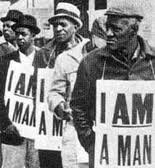 Mondays on Blog for Iowa are reserved for our labor update column. Did you know that the workers Martin Luther King was in Memphis helping when he was assassinated were AFSCME members? Today we honor Dr. King's memory and grieve his untimely death. How would our nation have been different today had he lived?
labornet.org
Martin Luther King knew that the right to unionization is one of the most important of civil rights. Virtually his last act was in support of that right, for he was killed by an assassin's bullet as he was preparing to lead strikers [sanitation workers in Memphis] in yet another demonstration.
There are of course many reasons for honoring him on Martin Luther King Day Jan. 15. But don't forget that one of the most important reasons, one that's often overlooked, is King's championing of the cause of the Memphis strikers and others who sought union recognition.
His assassination brought tremendous public pressure to bear on behalf of the strikers in Memphis. As a consequence, they soon were granted the union rights they had demanded.
For the first time, the workers' own representatives could sit across a table from their bosses and negotiate. They got their first paid holidays and vacations. They got substantial raises in wages that had been so low 40 percent of them had qualified for welfare payments. They got agreement that promotions would be made strictly on the basis of seniority, without regard to race, assuring the promotion of African Americans to supervisory positions for the first time. The strikers, in fact, got just about everything they had sought during the 65-day walkout.
The strikers' victory in Memphis led quickly to union recognition victories by black and white public employees throughout the South and elsewhere. They had passed a major test of union endurance against very heavy odds, prompting a great upsurge of union organizing and militancy among government workers.
As William Lucy, secretary-treasurer of the strikers' union, the American Federation of State, County and Municipal Employees, said, it was “a movement for dignity, for equity, and for access to power and responsibility for all Americans.”
Anyone doubting that the labor and civil rights movements were – and are – intertwined in that effort need only heed the words of Martin Luther King Jr.: “Our needs are identical with labor's needs: Decent wages, fair working conditions, livable housing, old-age security, health and welfare measures, conditions in which families can grow, have education for their children, and respect in the community.” (click here to read the entire article)
 Blog For Iowa