
Free Trade and Iowa
 by Paul Deaton
“The
by Paul Deaton
“TheKorea-US Free Trade Agreement represents a clinging to an outdated way
of achieving economic sustainability. What the US needs is fresh
thinking on economic sustainability, not another free trade agreement,
not more of the same.”
The web site of the Office of the United States Trade Representative presents this bit of information about the Korea-US Free Trade Agreement that may be of interest to Iowans: “For agricultural products, the (Korea-United States Free Trade Agreement) would immediately eliminate or phase out tariffs and quotas on a broad range of products, with almost two-thirds (by value) of Korea's agriculture imports from the United States becoming duty free upon entry into force.” The presumption of the treaty is that more agricultural exports to Korea would be good for Iowans.
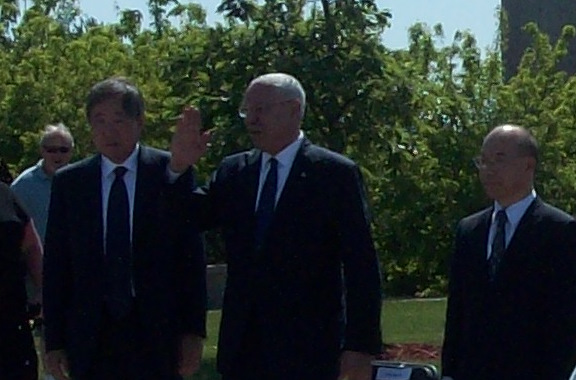
Blog for Iowa reported on Colin Powell's advocacy for the Korea-US Free Trade Agreement at the dedication of a memorial to Iowa's Korean War Veterans in Cedar Rapids, Iowa on June 1. What the author suspected was confirmed when three weeks later, there was movement in Washington on the treaty. Advocates of the trade agreement could be deemed successful when on June 26, US Trade Representative Ron Kirk announced that “at President Obama’s direction, we look forward to finalizing ways to address these concerns (with the agreement), level the playing field for U.S. workers and producers in the key sectors of autos and beef, and deliver to Americans the jobs and economic opportunity this agreement can bring.” The agreement, signed by Presidents George W. Bush and Roh Moo-hyun in 2007, had languished but now was getting traction.
Advancement of the Korea-US Free Trade Agreement may be an area where bipartisanship could come off life support. House Minority Leader John Boehner (R-OH) called for ratification of several free trade agreements last Tuesday. “Congress has yet to act on pending free trade agreements with Colombia, Panama, and South Korea.
These agreements would level the playing field for American workers, farmers, and businesses and pave the way for creating hundreds of thousands of new jobs here at home. […] Congress should approve these free trade agreements immediately.” Boehner's comments reflect additional traction for the treaty in Washington, even if they are a vapid and partisan ploy to say that Obama was not doing anything on the treaty the President advanced from limbo.
These days, cattle are mostly corn fed and overcoming the restrictions on export of American beef to Korea (put into place after the “mad cow disease” scare) would help Iowans who are corn growers and members of the Cattlemen's Association. In Cedar Rapids, a small group of South Korean businessmen indicated that the trade agreement would open additional opportunities for them to start up businesses in the United States, creating jobs. Yet these tiny bright lights remind me of the waning days of the use of whale oil after the commercialization of Pennsylvania petroleum in the mid-nineteenth century. The Korea-US Free Trade Agreement represents a clinging to an outdated way of achieving economic sustainability. What the US needs is fresh thinking on economic sustainability, not another free trade agreement, not more of the same.
The trouble is that this trade agreement is not on the radar screen for most Iowans. If ratified, it may temporarily alter the sales numbers for agricultural product producers as the increased exports to Korea are recognized. The Korea-US Free Trade Agreement is a band aid on a patient that seems terminally ill. We have to do better as a country. Proponents
of the Korea-US Free Trade Agreement may get the treaty improved and
ratified by the US Senate. Yes, additional jobs would be off-shored to
South Korea. Yes, South Korean farmers would be impacted by the US
subsidies of corn, soybeans, wheat and cotton as the Mexican farmers
were by NAFTA. Yes, the wealthy would increase their assets. And yes,
those of us in the middle class would feel additional pressure on our way
of life in the post-Reagan era.
~Paul Deaton is a native Iowan living in rural Johnson County and weekend
editor of Blog for Iowa. E-mail Paul Deaton
 Blog For Iowa