
Nuclear Spring in Iowa
 by Paul Deaton
“
I explained the New START treaty tothe musician and that the existence of nuclear weapons in the world is
the only existential threat to the United States: abolishing them would
enhance national security.”
Sitting in a
hotel lobby in Sioux City, Iowa, a church organist overheard a
conversation about the presentation we were to make in Des Moines the
following day. He had been in South Dakota at the request of a friend,
playing at a recital. On his return trip to Waterloo, like us, he had
stopped for rest. When my colleague left for his room, the organist
asked what was going on and I explained that we were touring the state,
speaking about the medical consequences of nuclear war. He said, “Didn’t
Obama sign something? It makes us weaker.” I explained the New START
treaty to the musician and that the existence of nuclear weapons in the
world is the only existential threat to the United States: abolishing
them would enhance national security. I invited him to our presentation
at the nearby public library that evening and encouraged him to ask his
question there. He did not attend.
The reason this a nuclear spring is
that for the first time since the end of the Cold War there is a United
States president who is willing to work diligently and consistently
towards a world without nuclear weapons. Already this spring, there was
the signing of the New START treaty between the United States and
Russia, release of the Nuclear Posture Review, a summit of world leaders
in Washington regarding securement of loose nuclear materials and the
Non-Proliferation Treaty Review Conference in New York City.
It has been a
busy spring and a time of hope. This work rightly belongs to the United
States, and has languished. As a result, there has been proliferation of
nuclear weapons and technology. The United States had become less safe.
One hopes this nuclear spring will result in success because if this
president is unable to reign in nuclear proliferation to enhance our
national security, it seems unlikely the next one will have the same
opportunity.
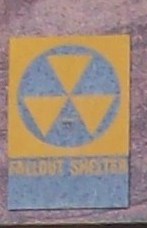
Sioux City is a place where nuclear
fallout shelters continue to be marked in the downtown area, a
background of a community living under the threat of nuclear
annihilation. We began our spring tour in Sioux City because we felt
they may need to hear the message the most. Our talks were about
national security, the medical consequences of nuclear war and this
nuclear spring. At gatherings at the Lion’s Club, at Briar Cliff
University and at the Aalfs Public Library people were attentive. Unlike
in the more metropolitan cities of Des Moines, Cedar Rapids, Iowa City
and Davenport, the corporate media was interested, sending television
crews and radio reporters to cover the story. The Siouxland has its own
social dynamics.
We were an unlikely entourage: a
millennial with an iPhone, a pathologist from San Francisco, a retired
Air Force officer who was on President Nixon’s staff and an Iowa
activist and blogger. As we viewed the landscape from atop one of the
Loess Hills, we couldn’t help but appreciate the glorious weather and
the hope for a future that includes a world without nuclear weapons. ~Paul
Deaton is a native Iowan living in rural Johnson County and weekend
editor of Blog for Iowa. He is also a member of Iowa Physicians for
Social Responsibility and Veterans for Peace. With the advent of spring
he is also planting and blogging about his garden which you can check
out here. E-mail Paul
Deaton
 Blog For Iowa