
Labor Leaders Stunned at Latest Health Care Compromise
by Tracy Kurowski
Last week, Senator Harry Reid revealed the latest compromise on a health care reform bill.
– No expansion of Medicare to seniors and retirees age 55 +
– Permits annual caps on benefits so long as they are not “unreasonable” The bill does not define what level of limits would be allowable, delegating that task to administration officials.
– Mandates that all Americans buy insurance by 2014 or be fined
– Retains premium-setting based on age as high as four times the rate for younger people
– Preserves bans on drug importation
– Inclusion of state option to ban abortion coverage in health insurance exchanges
– 40% excise tax on plans worth more than $8,500 per year for individuals and $23,000 for families
Most labor leaders are stunned – not wanting to publicly defame the only real chance at health care reform or cast stones at the very people whose support they need to move forward on labor reform they hope to get to early next year – but privately they must be reeling at what has become a bill with as many – and possibly more – negatives as positives for working people.
The enormous 40% excise tax on health care benefits is probably the most offensive to organized labor which has negotiated long and hard for health care coverage, and in recent years, by sacrificing wages and other benefits to maintain their health care coverage. Democrats defend the tax claiming that it will only affect executives and others who chose to purchase “Cadillac” plans. But under the current version of the Senate bill, one third of workers with employer-provided health coverage would be affected by the proposed excise tax. In later years, even more workers would be affected as their premiums increase at a faster pace than the tax threshold gets adjusted.
The proposal also hits workers who live in rural areas with little to no competition among insurers, and consequently pay up to 30% higher than average costs. Plans for workers in dangerous professions, like steelworkers, miners and building trades, also have higher-cost plans because they experience more work-related health problems.
If implemented, the proposed excise tax could effectively decrease health care coverage by establishing a system by which employers and workers devalue their health care to avoid paying the added tax.
Workers negotiating health care benefits may not even have the opportunity to water down benefits to control costs in some circumstances. According to the actuarial consulting firm Milliman, “whether someone hits the excise tax ceiling is not so much driven by benefit richness as it is by age, gender, profession, health status and the geography of the covered population.”
Characterizing the Senate’s tax on benefits as a shell game, Donna Smith, legislative advocate for the California Nurses Association condemns the proposal, “What it looks like is that most of these excise taxes may cause employers to drop level of coverage for workers. You'd be buying a lower-cost policy with higher out of pockets costs for workers. That's not cost-cutting, that’s cost-shifting.”
Labor leaders called an emergency meeting last Wednesday night after the Senate compromise was revealed. Aids described the meeting as emotional, which is not surprising given how much time, effort and money labor unions have poured into the fight for reform over the past year.
After the meeting’s conclusion, they seem united in accepting the Senate’s capitulation to the insurance industry and refocused their fight on the version of the bill already passed out of the House.
Trumka called the Senate bill “inadequate” and declared the fight continues to re-work the bill once it reaches conference committee. In a statement meant to caution the Democrats from accepting too many of the Senate’s compromises, Trumka did note that there will be political ramifications, “If you tax the benefits of workers so that they have less health care,” Trumka said, “I would expect them to consider that when voting.”
SEIU President Andy Stern concurred with Trumka on passing the bill despite its inadequacies. “It's time for the Senate to send this bill on to conference where the real work will be done. We've come too far, America's waited too long, to turn back now.” But in respect to the public option, Stern recognized that bills in conference usually get watered down rather than gussied up, “It's hard to imagine it getting better in conference.”
Leo Gerard, President of the United Steel Workers had much harsher words for the bill the following day on the Ed Schulz Show. Girard said President Obama “got Hoodwinked “ by the insurance industry and also predicts dire political consequences if the Democrats settle for the current Senate bill, “I can tell you this — point blank — if we don’t get a meaningful health care bill that reduces costs and has everybody in and doesn’t have an excise tax, has a pay or play for employers, has a public option, or a medicare buy-in, we’re not gonna campaign for any Democrat that voted against this bill, and we’re going to go out and try and defeat them.” “We need to fight for what's right for the country and by fighting for what's right for the country, we'll do what's right for people,” Gerard said. “I'm angry as hell.”
In the final evaluation, the line in the sand for labor leaders will be whether or not the conference committee bill includes the excise tax on health care benefits. If our benefits are taxed without the benefit of Medicare expansion for retirees, or a public option to keep costs down, you can count on the leadership to oppose the bill. Opposition means they, like the National Organization for Women has already decided to do, actively lobby their representatives and senators to vote it down, and if their elected leaders, however grudgingly, still vote in favor, to have a lot of explaining to do when they ask for labor’s support, money and door knockers in the mid-term elections.
For more information on how the tax hurts workers, go to: Economic Policy Institute Citizens for Tax Justice Watson Wyatt Report Tracy
Kurowski is currently AFL-CIO Community Services Liaison at the United
Way of the Quad City Area. She has been active in the labor movement
for ten years, first as a member of AFSCME 3506, when she taught adult
education classes at the City Colleges of Chicago. She moved to the
Quad Cities in 2007 where she worked as political coordinator with the
Quad City Federation of Labor, and as a caseworker for Congressman
Bruce Braley from 2007 – 2009.
Tracy Kurowski writes a labor update every Monday on Blog for Iowa
**BFIA ACTION ALERT**
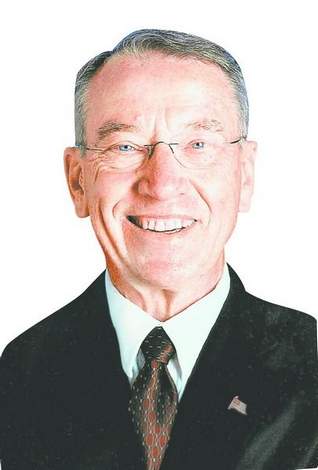
Let's not forget about one Iowan in particular who bears responsibility for the watering down of health care reform, and who we can actually do something about next year. If we do not send Grassley home when we have the chance, we all bear responsibility for what he may do next.
Get involved in un-electing Grassley. Check out the websites of the Democratic challengers, Roxanne Conlin, Tom Fiegen, Bob Krause


Your article is somewhat factual incorrect. A “work relates injury” is covered by the employer not the employee's own health care.
LikeLike
I think you are referring to “health – related problems” since “work related injury” isn't in the text. While injuries fall under workers compensation, health problems do not, and actuarial consulting firms do factor in occupation when setting premium rates for health insurance plans. Please see the EPI's website for more information
LikeLike