
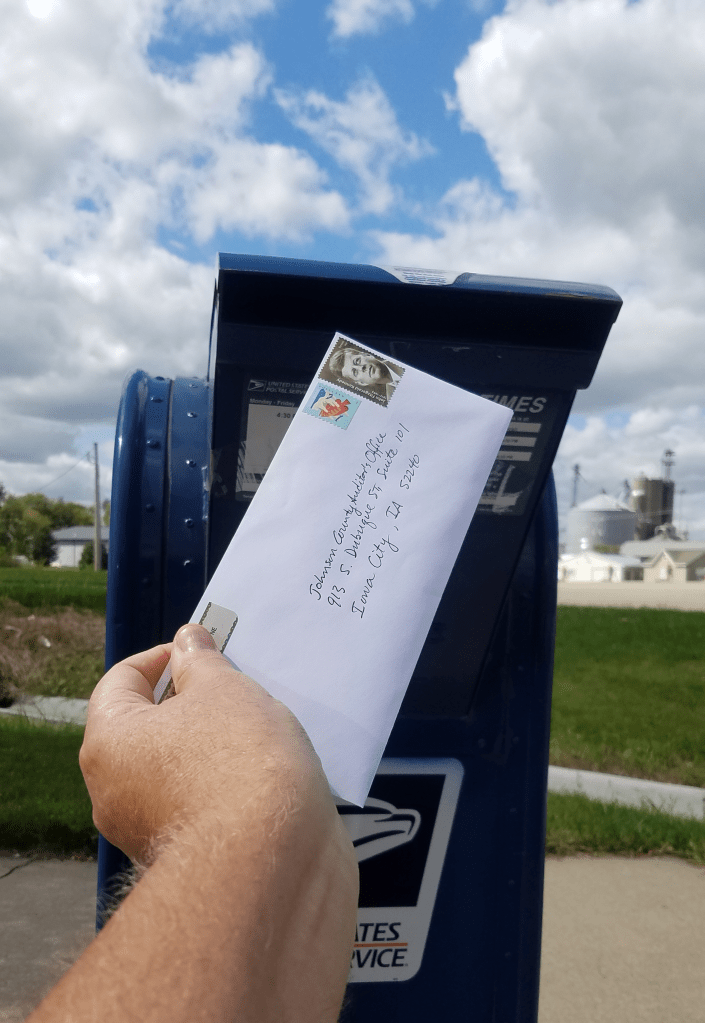
Early voting for the June 2, 2026 primary election began on Wednesday, May 13. I voted early because I am working on election day. Early voting feels almost like a non-event this year compared to the role it played in the Obama presidential campaigns of 2008 and 2012. Republican opposition to President Obama emerged quickly. He did win Iowa both years.
Fueled by investments by wealthy conservative and libertarian donors, along with authentic grassroots opposition to President Obama and the Affordable Care Act, a conservative backlash movement grew in the first year of Obama’s presidency. It included spontaneous local protests soon after Obama was sworn in, the April 15, 2009, Tax Day TEA Parties, and confrontations at congressional town hall meetings over the Affordable Care Act. This conservative movement energized Republican volunteers in the 2010 midterm elections.
2010 was a turning point in U.S. political history in which Obama faced serious resistance. The Patient Protection and Affordable Care Act was the most significant reform of U.S. health care since Lyndon Johnson signed legislation to create Medicaid and Medicare in 1965. It passed the Congress without a single Republican vote.
In the Republican resurgence in the 2010 midterm elections, they gained 63 seats in the U.S. House, made Rep. John Boehner Speaker, and gained six U.S. Senate seats. Democrats maintained control of the Senate yet had lost their filibuster-proof majority. In addition, Republicans made major gains in governorships and state legislatures. This positioned them to shape post-census redistricting in ways that strengthened their electoral position. The political polarization of 2010 endures today.
After the 2010 election, many Republican-led states enacted voter ID laws, reduced early voting periods, tightened absentee rules, and altered registration requirements. It is worth revisiting the election-law changes Iowa Republicans made after gaining unified control of state government in 2017.
In 2008 and 2012, Democratic organizations—the Obama campaign specifically—used early voting laws as a key part of their get out the vote efforts. They were successful. Republicans clearly noticed and moved to change voting law as soon as they gained control in Iowa.
The first election law change after Iowa Republicans won the trifecta in 2016 was House File 516 which reduced the early voting period from 40 to 29 days. They followed with another in 2021, Senate File 413, which further reduced the early voting period to 20 days. That leaves Iowa with an early voting period that is workable, but considerably less expansive than it once was. I believe this was part of the Republican intention.
Republican legislators made other changes to voting rules and processes. In 2017, HF 516 established Iowa’s voter ID requirements, required signature verification for some absentee ballots, changed absentee-ballot request procedures, and expanded procedures intended to prevent duplicate or ineligible voting. In 2021, the list of changes was longer:
- Polls closing at 8 p.m. instead of 9 p.m. on Election Day.
- Shorter deadlines for requesting and returning absentee ballots.
- Requiring most absentee ballots to arrive by Election Day, rather than allowing some postmarked ballots to arrive later.
- Restricting county auditors from mailing absentee-ballot request forms unless voters specifically requested them.
- Limiting counties to one ballot drop box location.
- Tightening rules on who could return another voter’s absentee ballot.
- Requiring petitions for additional satellite voting locations.
- Expanding procedures for moving inactive voters off registration rolls.
- Increasing state oversight and potential penalties for local election officials.
A primary election is not the best time to evaluate how Democratic organizations manage early voting. Because there are high-profile Democratic primaries for the open U.S. Senate seat, in some congressional races, and in supervisor races, each campaign does their own thing regarding early voter turnout. The effort gets reduced in language to some form of “vote on or before June 2,” rather than any obvious canvassing to harvest early ballots. The new laws prohibit intermediaries from collecting completed absentee ballots.
That I characterized early voting as a “non-event,” indicates the routine nature the process has become. However, it is important to remember how we got here if Democrats want to make it easier to vote going forward.

