
When the Iowa Legislature convened on Monday, House Majority Leader Pat Grassley reprised his position on banning books in schools. The Cedar Rapids Gazette reported:
Grassley doubled down on House Republicans’ efforts to remove books with sexual content from public school libraries and said Republicans may pass additional legislation to clarify or expand on the existing law.
In December, a federal judge temporarily blocked much of a law passed last year, Senate File 496, that banned books that depicted or described any of a list of sex acts from public schools and prohibited teaching about gender identity and sexual orientation before seventh grade, among a host of other regulations.
Lawmakers vow tax cuts, grieve school shooting by Caleb McCullough and Erin Burphy, Cedar Rapids Gazette, Jan. 9, 2024.
We couldn’t read Catcher in the Rye by J.D. Salinger in K-12 when I attended in the 1960s. It was no big deal. I used my newspaper route money to buy a copy at the book store. Since when do we need government intrusion in work that school teachers, librarians and parents should already be doing? We don’t. In some ways, the focus on banning books is a distraction from a more significant problem: K-6 reading skills.
Would-be book banners argue that readers can still purchase books they can no longer access through public libraries the way I did when I was a grader. That is only true for those with the financial resources to do so. For many, particularly children and young adults, schools and public libraries are the only means to access literature.
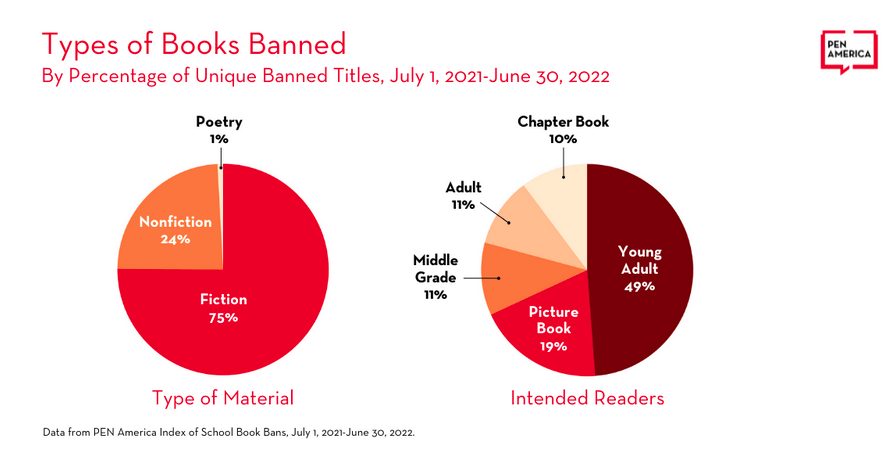
When people talk about the “culture wars,” control of books available to K-6 students is a core issue. USA Today summarized:
Banned books are not new, but they have gained new relevance in an escalating culture war that puts books centering racism, sexuality and gender identity at risk in public schools and libraries.
A dramatic uptick in challenged books over the past few years, an escalation of censorship tactics, and the coordinated harassment of teachers and librarians has regularly put book banning efforts in news headlines.
Book bans are on the rise. What are the most banned books and why? by Barbara VanDenBurgh, USA Today, Sept. 29, 2023.
There is a basic tenant of society, supported by research, that children of less educated parents will read less and society will be the worse for it. The corollary is children of well-educated parents will read more and in so doing expand their horizons to see a better life beyond immediate family. Teaching reading in school has been a mainstay of elevating children above the social station in which they were born, creating possibilities for life that would otherwise rely upon chance and happenstance.
Government should fund programs that encourage reading, make sure funds are not abused, and then shut the hell up. Leave reading curricula to those who know it best: teachers, librarians and parents. Passing a new law revising a state book banning process is of value only as political fodder. It would not help with a more fundamental problem of reading skills in K-6 students.
On Friday, Jan. 12, Iowa Attorney General Brenna Bird filed notice of appeal of the federal district court’s decision to halt implementation of Senate File 496. The distraction continues.
 Blog For Iowa
Good article, Paul. Interesting that you weren’t allowed to read Catcher in the Rye when you were in school. Where I went to school in small town Iowa, it was assigned homework.
LikeLiked by 1 person