
 “Although the flood was a disaster, what happened afterwards was sheer tragedy.” (NW Neighborhood Association president.)
Whether she’s right about what has been going on in Cedar Rapids or whether it turns out that she is incorrect, you can still be on the side of transparency and the people’s right to know. Why not get the facts and then decide?
 Help Lisa Kuzela obtain FOIA documents for flood recovery.
Click here to help DisasterRecoveryReform
Cedar Rapids Flood BACKGROUND:
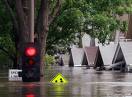
In 2008, Cedar Rapids, Iowa (U.S.) experienced a historical flood of magnitude proportions – 10 square miles. Thousands of homes were flooded, as well as nearly every public facility- main public library, central fire station, police station, sheriff’s station, city hall, school district administration building, school district warehouse, an elementary school, county administration building, animal control, ground transportation center ….
No one knows the exact amount, but it’s in the billions the state received from FEMA and The Department of Housing and Urban Development (HUD). Iowa got $3.8 billion from the American Recovery Reinvestment Act. The Governor created a state I-Jobs program bonding nearly a billion dollars. With the help of those in charge of these funds, they were (ab)used and wasted, mostly by non-profits and developers, as well as our city building everything new, whether needed or not. This even included buying a hotel and building a convention center, building a year-round farmer’s market and an amphitheater playground.
While businesses were immediately handed $50,000 grants without question, the flood victims waited for help and were stuck with documenting every cent, while making immediate decisions about where to live, what to throw out and what to keep and clean (and where to put it), filling out continual paperwork, standing in line to get help, rehabbing their home, going to work, and watching their family.
Landlords did not get any assistance to rehab for nearly eight months, and then it came with strict conditions. They were also denied assistance with their carrying costs – loss of rent to pay their mortgage, insurance and property taxes. They are still denied this, unless they participate in the buyout.
After four years, this inequitable treatment still continues in extensive and broad ways, and the city wastes millions and millions more of our taxes to rebuild this city with their dream projects that were planned before the flood.
One by one, thousands of flood victims watched their Constitutional Rights disappear; specifically the 4th and 5th Amendments.
MY GOAL: Federal Disaster Recovery Reform.
Unfortunately, reform usually doesn’t take place unless 1) there is proof for the need. Proof for the need usually has to come from accountability of the abuse, fraud, or unethical actions; and 2) there is continual steadfastness to do so. After four years, I still have not let up on this goal. If it doesn’t happen, future disaster victims will continue to be abused as we (and other disaster victims) were, and trillions of tax dollars will be wasted to help the rich get richer, instead of going to the intended cause of recovery….
Excerpt from one of my written reports:
Six months after the flood, on December 10, 2008, the Cedar Rapids City Council approved dividing the flooded neighborhoods up into three zones:
The Greenway: This area consisted of 192 parcels, nearly all homes.It was closest to the river, and it was decided that this area would be on the “wet side” of the levee – once the levee was constructed.
The Construction Zone: This area consisted of 554 parcels, nearly all homes. It was in between the Greenway and the Revitalization Zone. It was told to the public that this area is needed to construct the levee.However, although the City discussed flood protection on both sides of the river and throughout the city, the Construction Zone in the Time Check neighborhood was predominantly larger than any others – actually larger than all other construction zones combined.
Revitalization Zone: This area consisted of the remaining flooded parcels and deemed as the area to rebuild.
The onset of inequitable treatment began immediately, especially in the lower-income neighborhood named “Time Check,” which included a high percentage elderly and disabled homeowners and renters.
(1)Building permits were denied to most households on the east side of Ellis Blvd. NW., which was closest to the river. Later, the City released this restriction. Commercial properties just as close to the river were not denied building permits.(This inequitable treatment between residential and commercial flood victims is expounded upon in a later section.)
(2)Immediately upon the passage of the December Council vote, the City and their third party administrator for Jumpstart residential assistance (Affordable Housing Network, Inc.) immediately began denying any and ALL disaster recovery funds to the hundreds of residential property owners living in both the Greenway and the Construction Zone.
Many of these homeowners had already begun using the FEMA funds and their own money to rebuild.All funds, including State, Federal and Local Government funds have still since been denied to them, while others outside of those zones were allowed funds from all sources. In addition, it is understood that because of their location in the Greenway and Construction Zone, banks would not loan them money to help them rebuild.
(3)In addition, volunteer groups, such as Hands On, Eight Days of Hope, Christian World Organization (the “Greenshirts”) came to Cedar Rapids to help and were required to sign up at the Linn Area Long Term Recovery Center. Those at the Center decided who got volunteer help and who didn’t. The homeowners in these two zones were also denied volunteers. [End of excerpt].
Approximately seven months after the flood, the city sent out “Right of Entry” forms to flood victims in the Construction Zone. (Since then, all persons on the buyout list received this form.) I went before the City Council and complained. The staffer overseeing these stated to the Council that this is only asking for permission to go on their property; not to enter any home. The Council directed her to send out a second letter explaining that. The second letter said to basically sign the first, but it did state that “right of entry” is a legal term asking to enter onto the property; “we are not asking to enter any structure on the property.”
The City, however, used this form as an opportunity to do just that. They hired environmental crews to go into these homes and trash them. They put large holes in the walls and ceilings in every room, tore off siding, gutters, and even doors. If a flood victim wanted to rehabilitate and go back, they couldn’t, because it would mean even more work, and people were just exhausted to even stand up to it.
The goal of the environmental crews were to deem the home an “imminent threat.” By doing so, then three things happen:
FEMA will pay for the demolition (thus saving Community Development Block Grant, CDBG, funds for other projects);
The demolition of these historical homes bypasses the Historical Commission for approval;
They can be demolished without paying the property owner first.
FEMA has “imminent threat” for those buildings that are actually an immediate public danger. (We all probably saw many images of this with Katrina.) Nearly all of these homes were NOT in any danger to the public! There is evidence of this.
However, the environmentalists would deem these an imminent threat due to such things as lead paint, asbestos, and even an added on garage falling down – the house was in great shape, and though the owners were still considering rehabbing it, they destroyed it to the point it could not be rehabbed. – Yes, we have photos! 🙂
Before we were allowed to go back into our homes after the flood receded, the fire department and other non-qualified persons “inspected” our homes and taped colored placards on them.
There were four levels of placards:
Green – can go ahead and occupy;
Yellow – some damage, rehab it;
Red – some possible structural damage;
Purple – serious structural damage, must be demolished.
The purple tags are those homes that FEMA would consider as imminent threat/danger to the public, and need to be torn down immediately. However most of the homes that the City pulled this backdoor eminent domain on were yellow! They have even demolished green-tagged homes.
After the City purchased these properties with Federal funds, they have and are in the process still of giving hundreds of them away for FREE to their friends -developers, contractors, and non profits. The two non profits were the same two in charge of the residential funding for rehab and the volunteers. Interesting, isn’t it? This conflict of interest still continues to be ignored, even by the Federal Agencies.
When flood victims entered into the “voluntary property acquisition,” most homes were demolished usually well before the property owner was compensated. Some even waited two years to get paid. In 2010, over 500 homes were demolished; 80% of them were done before being paid for their home.
Yet, the City continued calling it a “voluntary acquisition.” Who is going to back out of an acquisition when their home is gone?
Those of us involved in the Time Check neighborhood (the largest neighborhood that was flooded) before the flood knew for years before the flood that the city wanted our property for redevelopment. The Army Corps told the City for decades that they were eligible to receive Federal assistance for a levee on the west side in Time Check – we, at that time, met the cost to benefit ratio required to receive Federal assistance for the flood protection. However, the City’s response was that they “did not want to detract from the aesthetics of the river.” The Army Corps even warned the City that we were not protected for even a 100-year flood. The city did not act on any of these warnings or recommendations.
Disasters, especially floods, have been utilized as an opportunity for the community to “economically cleanse” the area.
These residents were of lower income, elderly and disabled. They were taken advantage of and mistreated. Their Constitutional Rights were trampled on. It happened in New Orleans, and it happened here, and I’m sure it’s happened in nearly all the other floods that our country has experienced. I can guarantee it will continue to happen as long as nothing is done about it.
We must end this. On behalf of all disaster victims now and in the future, please help!
I have the tenacity to get this done, but I do not have the funds. I have spent four years and thousands of hours voluntarily researching, and although these funds will not be going to pay me or anyone else, I need them to get more public information. FOI is not free.
Click here to help Lisa Kuzela obtain FOIA documents for flood recovery.
The funds I am requesting will go toward receiving documentation through Freedom of Information Acts (FOIA) from Federal and State Agencies and Departments in order to build my cases more solid to achieve this much-needed change of direction in our country for disaster victims and disaster spending. It’s difficult to get Federal Disaster Reform without proof of the misuse of funds, fraud, and unethical actions that hurt those who the funds are intended to help. And it’s difficult to get FOI documents without money, especially when our city is charging well over the actual cost amount to deter me from getting the information.
(click here to go to Lisa’s page and read her entire article)

 Blog For Iowa